

Container Cold Room for Fresh Meats
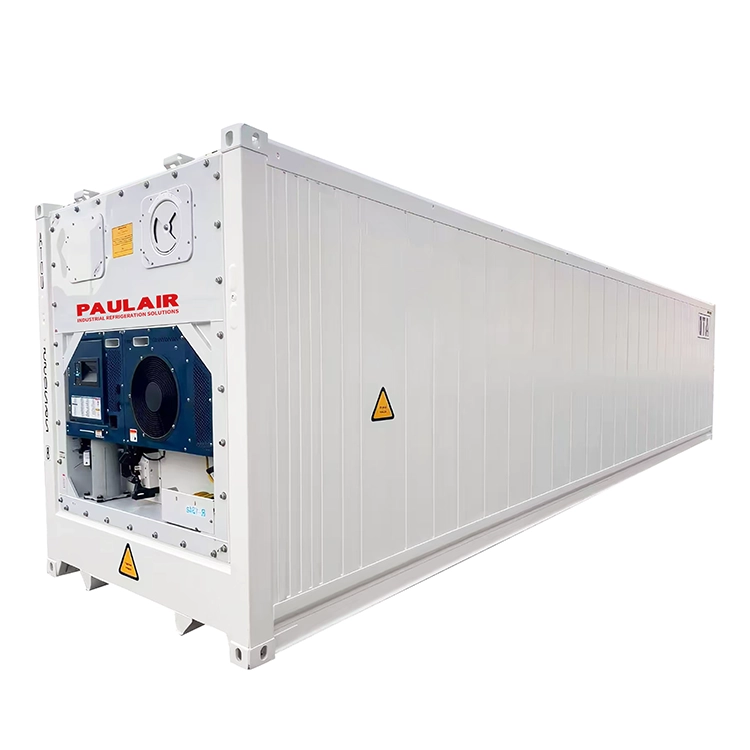
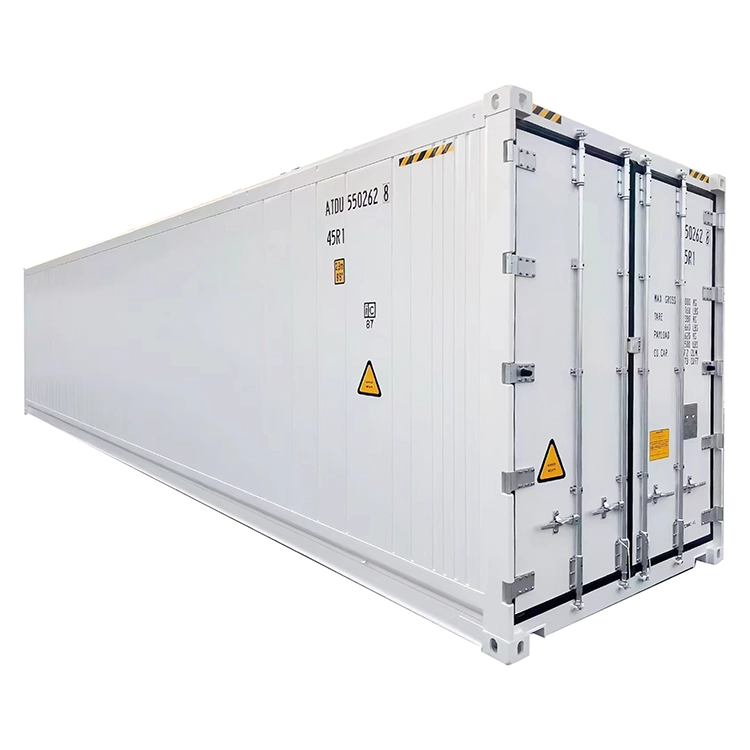
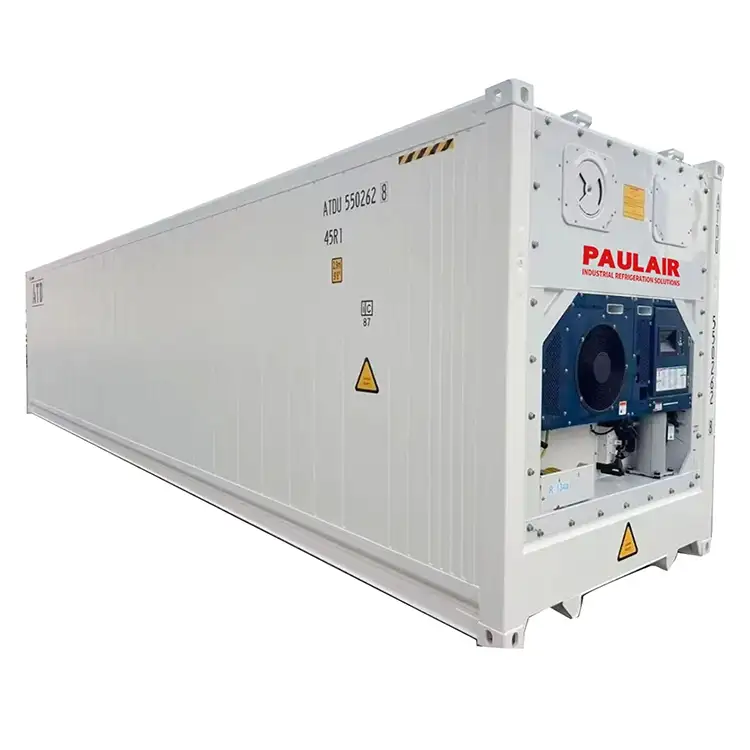
Engineered for fresh pork, beef, and lamb, the Container Cold Room for Fresh Meats delivers rapid chilling, aging, storage, and transport. Featuring precise climate control and insulated design, it comes in custom 20ft/40ft specs for abattoirs and cold-chain hubs.
The post-slaughter phase is the most critical window for determining meat quality, shelf life, and commercial market value. Fresh meat does not simply go into standard refrigeration; it requires a precise temperature- and humidity-controlled maturation process. Uncontrolled cooling rates, improper air velocity, or unbalanced humidity can cause excessive weight shrinkage, surface drying, and microbial risks. The Container Cold Room for Fresh Meats is an all-in-one mobile solution designed specifically to manage this delicate acidification and chilling stage efficiently, whether placed right at the slaughterhouse or used for inter-regional transportation.

From Slaughter to Cold Chain: Tailored Temperature Control Strategies
The initial thermal state of fresh meat upon entry directly governs the required configuration of the cooling system. If meat has already undergone full pre-cooling, the primary task inside the container is maintaining stable hold temperatures while compensating for external ambient heat gain. However, when warm meat enters straight from the slaughter line, the refrigeration load spikes drastically. In this case, initial meat temperature, batch weight, and target pull-down time must be factored into sizing higher-capacity cooling units. For maturation and acid removal tasks, precision control over airflow, humidity, and temperature cycles is required.
Selecting the right equipment should always begin with defining the precise entry conditions and processing timelines of your product. Relying solely on standard 20ft or 40ft box dimensions without analyzing heat load frequently leads to under-cooling or wasted energy.

Engineered for Hanging Meat and Palletized Cargo Loading
To match your facility's operational workflow, the interior layout can be configured for hanging carcasses or stacking boxed products, maximizing air circulation and operational efficiency.
Suspended Acid Removal (Hanging Rail Layout)
For whole carcasses, half-carcasses, or large primals, internal stainless steel guide rails, heavy-duty hooks, and reinforced support frames are built directly into the container structure. Hanging prevents physical compression between meat pieces, creating continuous air channels necessary for uniform cooling and maturation.

Customizable Internal Configurations:
- Food-grade stainless steel hanging rails and switches
- Heavy-duty hooks and connection hardware
- Custom guide rail layout and track spacing
- Tailored load-bearing structural support
Tray & Pallet Refrigeration Layout
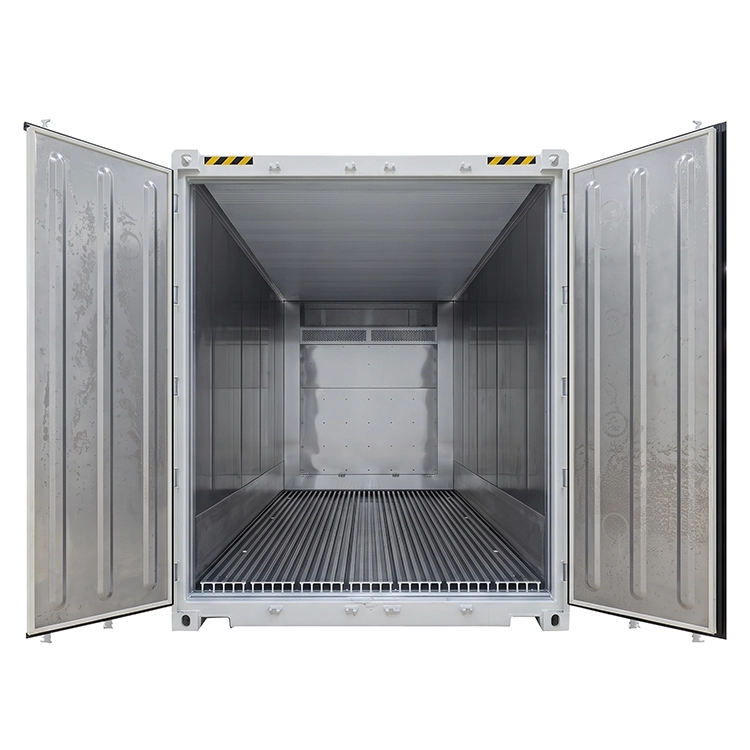
For sliced, vacuum-packed, or boxed fresh meat, palletized loading offers rapid handling. Air supply and return channels are specially engineered into the container design so stacked pallets do not obstruct circulation. This prevents localized warm spots and ensures even pull-down speeds from the front to the back of the chamber.

Key Calculation Parameters for Sizing Cooling Equipment
Target meat temperature changes—not just room air temperature—dictate system design. During deacidification, settings depend on species, regulatory food safety standards, and processing goals. Sizing decisions focus heavily on the real-world operational parameters below:
| Technical Parameter | Operational Significance |
|---|---|
| Meat Type | Pork, beef, and mutton possess distinct heat capacities and acidification profiles. |
| Entry Meat Temperature | Determines initial sensible heat load peak upon chamber loading. |
| Batch Loading Weight | Directly impacts total heat energy to be extracted during the cycle. |
| Target Core Temperature | Establishes required pull-down rate and final hold baseline. |
| Acid Removal Cycle Time | Governs compressor duty cycles and continuous cooling capacity needs. |
| Ambient Temperature | Calculates thermal gain through insulated box walls under extreme heat. |
| Door Opening Frequency | Determines humidity ingress and sensible heat infiltration losses. |
| Loading & Stacking Method | Dictates static pressure drop and required fan throw distance. |
| Packaging Type | Affects thermal conduction rate between meat surface and air. |
| Box Insulation Performance | Determines long-term energy efficiency and temperature maintenance. |
Providing the initial entry temperature and target core temperature during inquiry allows our engineering team to calculate accurate compressor sizing, ensuring long-term reliability and lower energy bills.

Advanced Humidity Management: Protecting Yield and Quality
Humidity control during meat chilling directly impacts bottom-line profitability. Low relative humidity accelerates moisture evaporation, causing noticeable weight shrinkage and surface discoloration. Conversely, excessively high humidity combined with temperature fluctuations leads to surface condensation and microbial risks.
Our engineered systems balance the following variables to maintain optimal moisture levels:
- Meat surface area exposure and cuts
- Packaging permeability and tray spacing
- Air temperature differentials and dew point calculation
- Evaporator fan air velocity across product surfaces
Standard Controlled Operating Range: Temperature: 0°C to 4°C | Relative Humidity: 85% to 95%

3D Air Circulation: Eliminating Hot Spots
A common issue in temporary refrigeration is inconsistent temperature distribution—the air near the evaporator reaches setpoint while center-stacked or tightly hung meat remains warm. To ensure air penetrates deep into the cargo area, our solutions integrate:
- Strategic evaporator mounting positions
- Custom air supply and return duct layouts
- High-static pressure fans with controlled throw velocity
- Optimized spacing margins along wall linings

Hygienic Structure and Insulated Box Specifications
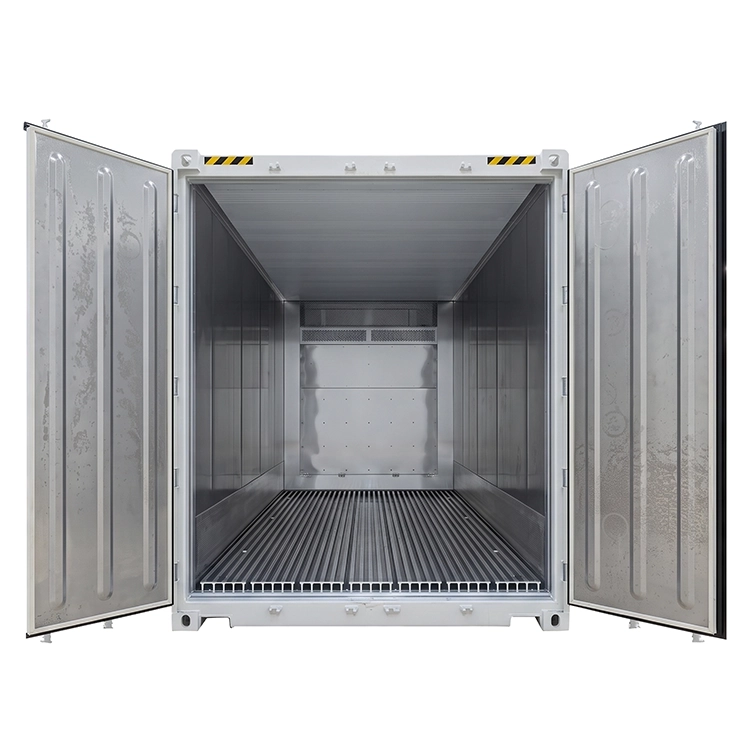
Meat processing environments demand rigorous sanitation standards. The interior shell uses smooth, corrosion-resistant, food-safe materials that prevent blood, condensate, and residue from building up in hard-to-clean seams.
| System Component | Technical Configuration |
|---|---|
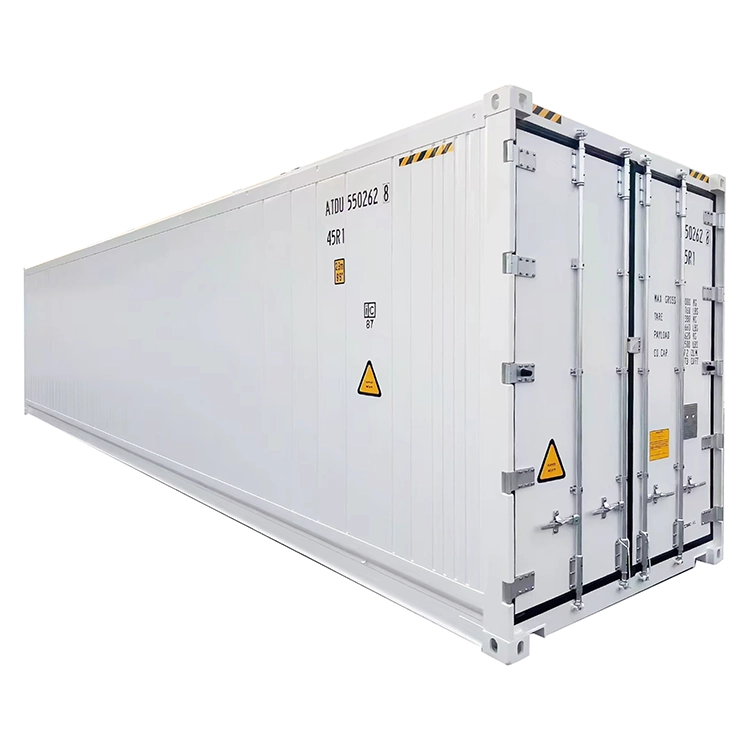
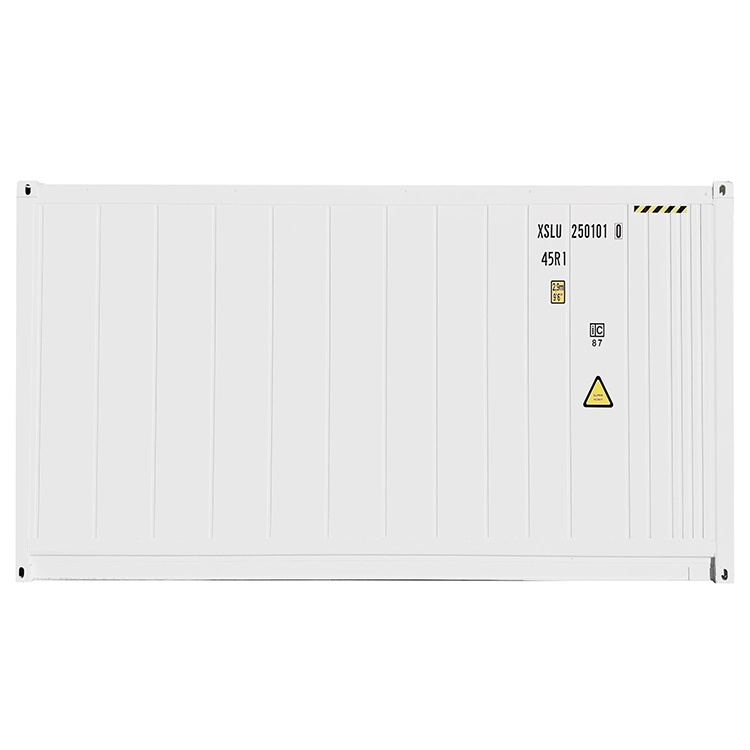
| Box Specifications | 20ft / 40ft High Cube / Customized Non-Standard Sizes |
| Insulation Material | High-Density Polyurethane (PU) Foam |
| Insulation Thickness | 100mm core panel insulation |
| Internal Dimensions |
20ft: 5.44m (L) × 2.29m (W) × 2.16m (H) 40ft: 11.56m (L) × 2.29m (W) × 2.16m (H) |
| Flooring Material | Heavy-Duty Anti-Slip Aluminum T-Floor with Drainage Outlets |
| Door System | Heavy-duty air-tight double doors with internal safety release handle |
| Compressor System | High-efficiency Scroll Compressor Units (Copeland / GMCC / Emerson) |
| Temperature Range | 0°C to 4°C (Adjustable down to negative ranges upon request) |
| Maximum Payload Capacity |
20ft: 27,290 kg – 27,550 kg 40ft: 29,200 kg – 30,620 kg |
Refrigeration System Matching and Component Quality
Cooling capacity is calculated based on total sensible and latent heat loads rather than arbitrary horse-power assumptions. Total heat load includes:
Cargo Heat Extraction + Transmission Loss + Door Infiltration + Fan Motors Heat + Operational Safety Margin

Key Component Configurations:
- Compressor Brands
- Refrigerants: Eco-friendly R404A / R448A / R449A
- Power Standards: 380V/50Hz, 460V/60Hz, or custom regional voltages
Intelligent Temperature Control and Monitoring
Automated control units give plant managers full visibility over real-time processing conditions. Systems can be configured with standard digital controllers or advanced PLC touchscreens featuring:
- Real-time digital temperature and humidity display
- Automatic electric or hot-gas defrost management
- High/low temperature visual and audible alarms
- IoT remote monitoring (cellular / Wi-Fi) via smartphone or desktop
- Automated data logging for HACCP compliance verification
Primary Application Scenarios
Deploying a Container Cold Room for Fresh Meats offers flexible, modular capacity across multiple sectors of the meat supply chain:
- Slaughterhouses & Abattoirs: Immediate post-slaughter chilling and carcass acidification without waiting for fixed cold store expansion.
- Meat Processing Plants: Modular cold storage buffer during peak production surges and seasonal order spikes.
- Cold Chain Logistics Hubs: Rapid temporary storage and temperature holding during transit transshipments.
- Distribution Centers: Staging zone for urban, wholesale, or supermarket distribution.

Rigorous Factory Inspection & Quality Assurance
Every unit undergoes full dynamic testing in our factory prior to shipping to ensure seamless commissioning upon delivery:
- Refrigeration Pressure Testing: Full system run-in test verifying holding pressures, suction superheat, and pull-down rates.
- Air-Tightness & Seal Check: Complete perimeter laser and thermal inspection of doors, corner joints, and wall panel seals.
- Electrical & Safety Audit: Verification of automated alarms, defrost controls, compressor safety cut-outs, and earth grounding.
- Hygienic Surface Finish Inspection: Ensuring food-grade interior walls, sloped drainage lines, and seamless floor joints meet sanitary standards.

Our manufacturing practices comply with global framework standards including ISO 1496-2:2018, GB/T 5338.2—2023, SB/T 10797, and SN/T 0981.2. Technical documentation, electrical schematics, and test certificates are provided with each shipment.
Inquiry Checklist: What Information to Provide for an Accurate Quote
To help our engineering team design the most cost-effective and energy-efficient cooling configuration, please provide the following details when requesting a quotation:
- Type of meat (Beef, Pork, Mutton, Poultry)
- Batch volume / total weight per loading cycle
- Meat entry temperature & target core temperature
- Required acidification / pull-down time window
- Maximum ambient site temperature
- Container size preference (20ft, 40ft, or customized)
- Loading preference (Hanging rails, pallet trays, or hybrid)
- Power supply specifications on site (Voltage / Frequency / Phase)

Pricing Tiers, Order Minimums, and Commercial Terms
20ft Container Price Tiers
| Order Volume (Units) | Unit Price (USD) |
|---|---|
| 1 – 5 | $15,000 |
| 5 – 10 | $13,000 |
| 10 – 20 | $11,000 |
| 20+ | $10,000 |
40ft Container Price Tiers
| Order Volume (Units) | Unit Price (USD) |
|---|---|
| 1 – 5 | $25,000 |
| 5 – 10 | $23,000 |
| 10 – 20 | $21,000 |
| 20+ | $20,000 |
* Final pricing depends on customized cooling capacity, internal hanging rail complexity, control options, and specific trade terms.
- Port of Loading: Qingdao Port (or customer requested port)
- Payment Terms: 30% deposit by T/T, balance paid prior to shipment
- Delivery Lead Time: Standard orders ship in 45 working days; expedited orders can be processed in 30 working days subject to factory schedule.
Warranty and After-Sales Technical Support
Every unit comes with a 1-year comprehensive system warranty. Spare parts required during the warranty period are dispatched via express freight. Lifetime technical assistance, remote diagnostics, and operational troubleshooting are provided by our technical engineering team.
Compliance Certificates


FAQ
1. How does this specialized unit differ from a standard reefer shipping container?
Standard shipping reefers are designed solely to maintain temperature for pre-chilled goods during transport. A specialized container cold room for meat is built to extract heavy peak heat loads from freshly slaughtered carcasses, manage active humidity levels to prevent drip loss, and integrate heavy-duty hanging rails or engineered floor channels for optimized air distribution.
2. Can freshly slaughtered warm meat be placed directly into the container?
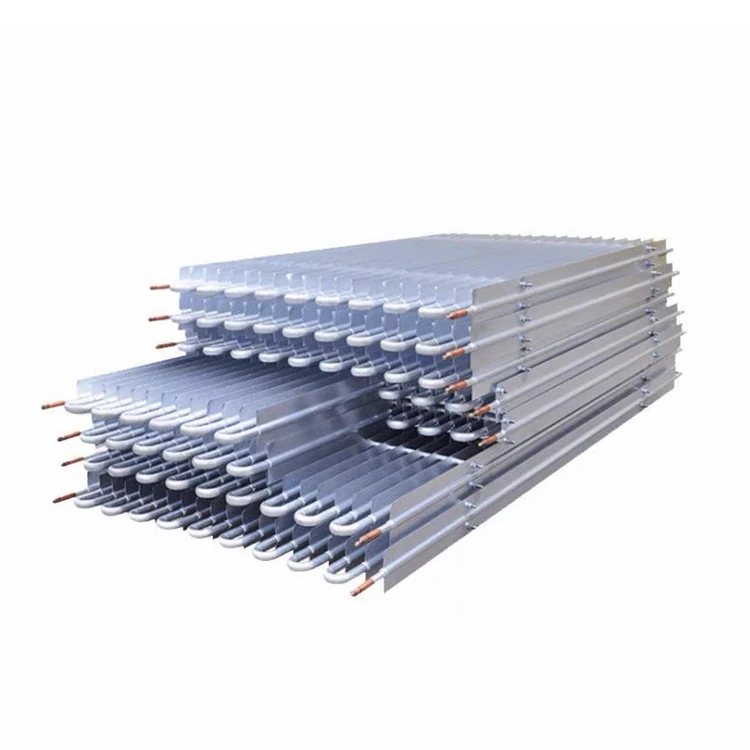
Yes. However, the initial heat capacity must be calculated during ordering so that high-capacity compressors and larger evaporator coils are installed to handle the intense pull-down phase efficiently.
3. Why is active humidity control necessary during acidification?
Uncontrolled low humidity leads to weight shrinkage and surface dry-out, directly reducing saleable meat weight. Excessively high humidity causes condensation, creating bacterial risks. Controlled humidity (85%–95%) preserves yield and quality.
4. Is hanging better than tray loading for fresh meat?
Hanging is ideal for whole or semi-carcasses to allow 360-degree air contact and prevent pressure marks. Boxed, vacuum-packed, or smaller cuts are better suited for palletized tray loading with air channels.
5. Can internal hanging rails be customized for our existing hook system?
Yes, rail layout, spacing, track height, and load capacity can be tailored to match your abattoir's existing conveyor hooks and operational workflow.

Send Inquiry
Contact Info
-
Address
Xinyuan Avenue, Sangzidian Subdistrict, Tianqiao Borough, Jinan City, Shandong Province, China
-
Tel
-
Submit your project specifications to receive tailored guidance, technical drawings, and cheap factory-direct wholesale pricing from our engineering team today.
Related Products
News Recommendations