

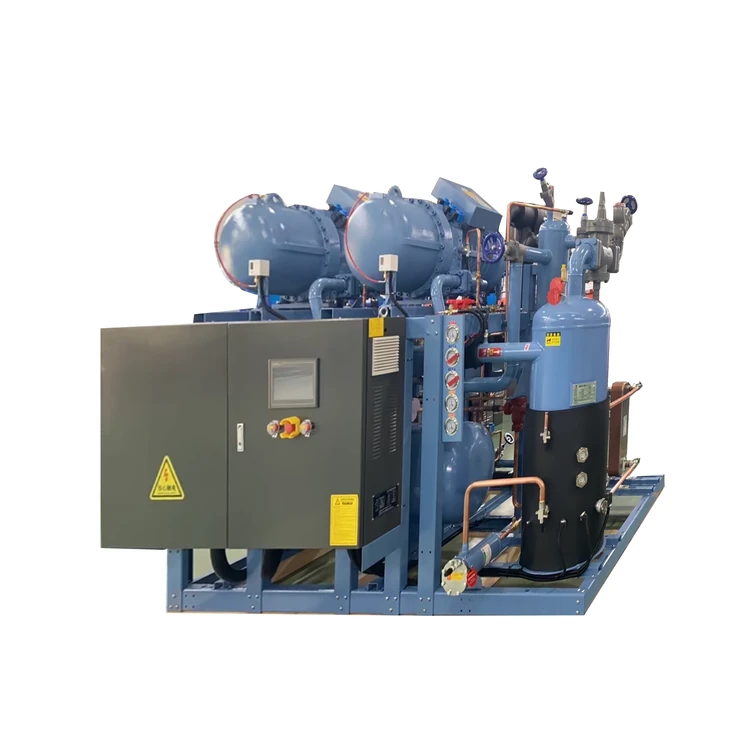
Screw Refrigeration Unit
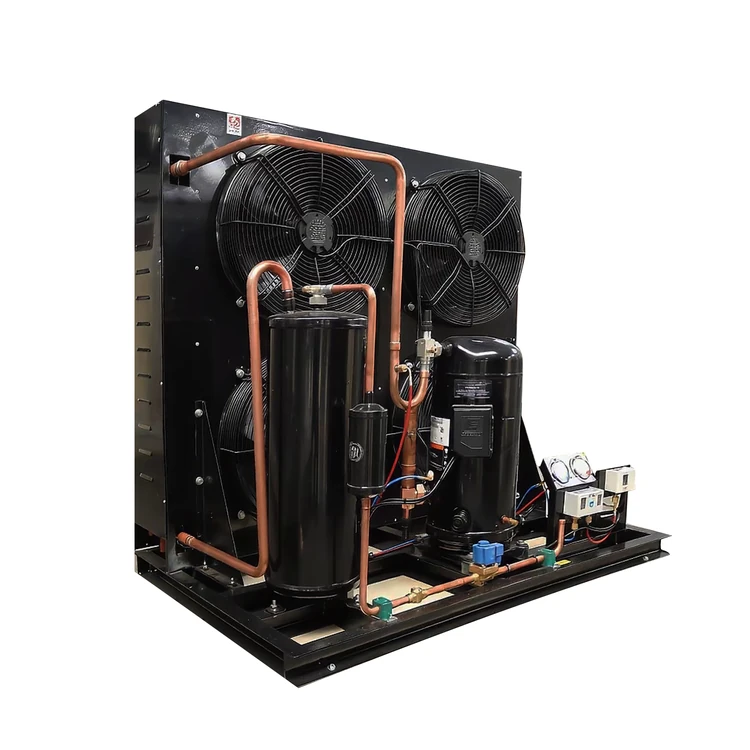
The screw refrigeration unit adopts the principle of volumetric rotary compression, which continuously compresses the refrigerant through the interlocking female and male rotors. Unlike the reciprocating structure of piston compressors, screw compressors complete continuous compression through rotor rotation, making them suitable for projects requiring large refrigeration capacity such as medium and large cold storage, cold chain logistics centers, food processing plants, and industrial process refrigeration.
For projects that require long-term operation, significant changes in cooling load, or centralized configuration of multiple cooling stages, screw refrigeration units can provide corresponding equipment selection solutions. According to the specific model, the cooling capacity of a single machine can cover about 100 kW to several hundred kW, and the cooling output can be adjusted through capacity adjustment mechanisms such as slide valves to meet the cooling needs of different stages.
Paulair Energy and Environmental Technology Co., Ltd. focuses on commercial and industrial refrigeration and cold chain solutions. It has production and research and development bases in Jinan and Qingdao, with capabilities in refrigeration equipment design, research and development, production assembly, and system control research and development. The company can assist customers in determining the configuration plan of screw refrigeration units based on the scale of the cold storage, target temperature, turnover of goods, operating time, and on-site conditions.


Parameter Table of Screw Refrigeration Unit
| parameter item | Parameter Information |
| Product Name | Screw refrigeration unit |
| Compressor type | Positive displacement rotary compressor |
| Working principle | The Yin and Yang rotors mesh with each other, continuously compressing the refrigerant through the rotation of the rotor |
| Reference single machine cooling capacity | kW About 100 kW to several hundred kW |
| Capacity adjustment method | Some models use slide valve stepless adjustment |
| Reference capacity adjustment range | About 10% -100%, depending on the model and control method |
| Operating characteristics | Relatively stable operation, suitable for long-term continuous cooling |
| System Features | It has certain fault tolerance advantages for liquid impact, but it is still necessary to prevent abnormal liquid return |
| lubrication method | Usually, oil injection lubrication is used, involving oil circuit, sealing, and oil cooling system |
| Maintenance focus | Lubricating oil status, oil temperature, oil pressure, filter components, and compressor operating parameters |
| Typical Applications | Large frozen meat and aquatic cold storage, cold chain logistics park, prefabricated vegetable processing plant, slaughter and meat product processing, industrial process refrigeration, large commercial central air conditioning |
| customized content | System configuration can be based on cooling load, target temperature, operating time, and control requirements |
| Warranty period | 12 months |
| Technical Support | Cooling capacity calculation, system scheme design, equipment configuration, remote debugging, and related spare parts support |
Technical advantages of screw refrigeration units
1. Continuous compression, suitable for medium and large refrigeration loads
The screw compressor forms a working volume through the engagement of the female and male rotors, and completes the suction, compression, and discharge of refrigerant as the rotor rotates. The continuous compression structure is suitable for medium to large refrigeration systems and can be used for cold storage groups, cold chain logistics facilities, and food processing supporting refrigeration.
In the provided product technical information, the reference range for the single unit cooling capacity of screw units is 100 kW to several hundred kW. The specific cooling capacity needs to be determined based on parameters such as model, evaporation temperature, condensation temperature, and refrigerant.
2. Capacity adjustment to adapt to load changes
Some screw compressors use slide valve adjustment mechanisms, which can achieve stepless capacity adjustment of about 10% -100%. The actual adjustment range depends on the specific compressor and control configuration.
For scenarios such as centralized storage of goods, changes in food processing production schedules, and seasonal variations in cold storage loads, capacity adjustment helps to match refrigeration output with actual demand. When selecting a project, the operational performance should be evaluated based on the load curve and unit performance data.
3. Refrigeration projects suitable for continuous operation
Screw compressors adopt a rotating structure, with relatively low operating vibration, and can be used in industrial and commercial projects that require long-term continuous refrigeration. For large frozen meat warehouses, aquatic freezing warehouses, cold chain logistics parks, and food processing plants, the stability of unit operation, capacity adjustment methods, and maintenance plans are important configuration factors.
4. System adaptability to operating conditions
Compared with piston compressors, screw compressors usually have certain fault tolerance advantages in terms of system liquid impact, but this does not mean that the equipment can operate under abnormal conditions such as large refrigerant return. In actual use, gas-liquid separation, liquid supply control, lubrication, and system protection still need to be done well.
5. The oil system is the focus of design and maintenance
Screw refrigeration units are usually equipped with systems related to oil injection lubrication, sealing, and oil cooling. Oil temperature, oil pressure, oil circuit status, and filter components can all affect equipment operation. For projects that run continuously for a long time, oil system inspections and regular maintenance should be included in the equipment management plan.
Main application scenarios
Large scale refrigeration and freezing warehouses
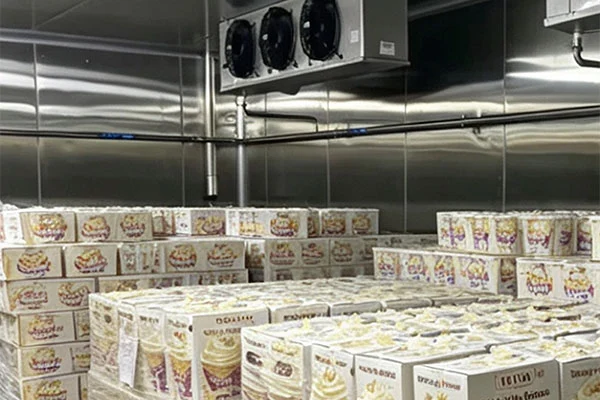
Suitable for large-scale frozen meat, aquatic products, and other food refrigeration and freezing projects. For cold storage facilities that require large refrigeration capacity or long-term operation, the configuration of screw units can be evaluated based on target temperature and heat load.
Cold chain logistics park and distribution center
Cold chain parks typically involve multiple storage areas, different cargo turnover cycles, and varying refrigeration loads. Screw refrigeration units can be used for centralized refrigeration or related cold storage systems, and the specific plan needs to be designed according to the load distribution of each temperature zone.
Prefabricated food and cooked food processing factory
Food processing projects may involve simultaneous processes such as raw material refrigeration, processing environment cooling, finished product storage, and freezing. Refrigeration equipment should be configured according to the temperature requirements and operating time of each link, to avoid determining unit capacity solely based on plant area.
Slaughtering and meat processing
There are different requirements for temperature control and continuous operation in scenarios such as slaughter, meat processing, acid removal rooms, and freezing rooms. Screw units can be configured according to the heat load of each process step.
Industrial process refrigeration
Chemical, pharmaceutical, and other industrial manufacturing projects can evaluate screw refrigeration schemes based on process temperature, cooling load, and operating conditions. When dealing with special process media or special refrigerants, further verification of the equipment's applicable scope should be conducted.
Central air conditioning for large commercial buildings
For large building centralized air conditioning systems, the applicability of screw refrigeration equipment can be evaluated based on the design cooling load, chilled water system, and operation plan.
How to choose a screw refrigeration unit?
The configuration of screw units should be based on the actual refrigeration load and operating conditions. At the beginning of the project, it is necessary to clarify the size, insulation structure, target storage temperature, incoming temperature of goods, daily turnover of goods, environmental temperature, and expected operating time of the cold storage.
For cold chain parks or multi temperature zone cold storage groups, it is also necessary to evaluate the load distribution of each temperature zone, simultaneous operation demand, feasibility of centralized refrigeration, and equipment adjustment range. For projects with significant load changes, the capacity adjustment capability of the compressor should be checked against the actual load curve.
Paul Yak provides technical communication related to refrigeration capacity calculation, system scheme design, equipment configuration, and control system based on project requirements. Some products can be equipped with IOT intelligent control system, which supports remote viewing of temperature, compressor operation status, fan status, defrosting status, equipment alarm, real-time current and historical temperature data.
Manufacturing and quality inspection capabilities
Paulair's two factories in Jinan and Qingdao cover a total area of 12000 square meters, with an office and research and development area of 1000 square meters. They have two production lines and an annual production capacity of approximately 1000 refrigeration units, as well as an independent testing area.
The company has the ability to independently design, develop, produce, and assemble refrigeration equipment. Product quality control covers incoming inspection of raw materials and components, system airtightness testing, pressure testing, vacuum testing, electrical safety testing, refrigeration performance testing, temperature testing, overall operation testing, and factory inspection.
The company has 4 R&D engineers and 2 system engineers, with 10 years of work experience and independent control system R&D capabilities. They can design, optimize, and customize system solutions according to project requirements. The company has 2 invention patents, 16 utility model patents, and 13 software patents.
Overseas project technical support and after-sales service
For overseas customers, Paul Yak provides equipment selection, system configuration, installation guidance, remote debugging, operation training, troubleshooting of operational issues, and related spare parts support according to project requirements.
Remote technical services may involve equipment parameter adjustment, system updates, machine alarm checks, and handling of non-human quality issues. The supply and replacement of damaged parts do not include consumables; For refrigerant shortage caused by transportation or other reasons, supplementary support or technical guidance can be provided according to the actual situation.
The product warranty period is 12 months, and the after-sales response time is within 48 hours. The specific service scope shall be subject to the contract agreement.
Frequently Asked Questions
What is the suitable size for a screw refrigeration unit in a cold storage facility?
Screw units are mainly used in medium to large refrigeration systems. The cooling capacity of a single machine can be referred to in the range of about 100 kW to several hundred kW, but the specific applicable scale depends on the target storage temperature, heat load, model, and operating conditions.
Can screw units be automatically adjusted according to load?
Some models use slide valves to achieve capacity adjustment, and corresponding control schemes can also be evaluated based on specific product configurations. The actual adjustment range and control logic need to be confirmed based on the technical parameters of the equipment.
What are the key components that need to be maintained for screw refrigeration units?
In addition to routine refrigeration system inspections, it is also necessary to pay attention to the status of lubricating oil, oil pressure, oil temperature, oil circuit, and related filtering components, and regularly check the operating parameters of the compressor and system protection devices.
Are screw units suitable for food processing plants?
Whether it is applicable or not depends on the processing technology, temperature requirements of each area, and refrigeration load. Screw units can be used as supporting refrigeration systems for prefabricated dishes, cooked food, meat products, and seafood processing projects.
Send Inquiry
Contact Info
-
Address
Xinyuan Avenue, Sangzidian Subdistrict, Tianqiao Borough, Jinan City, Shandong Province, China
-
Tel
-
Submit your project specifications to receive tailored guidance, technical drawings, and cheap factory-direct wholesale pricing from our engineering team today.


News Recommendations