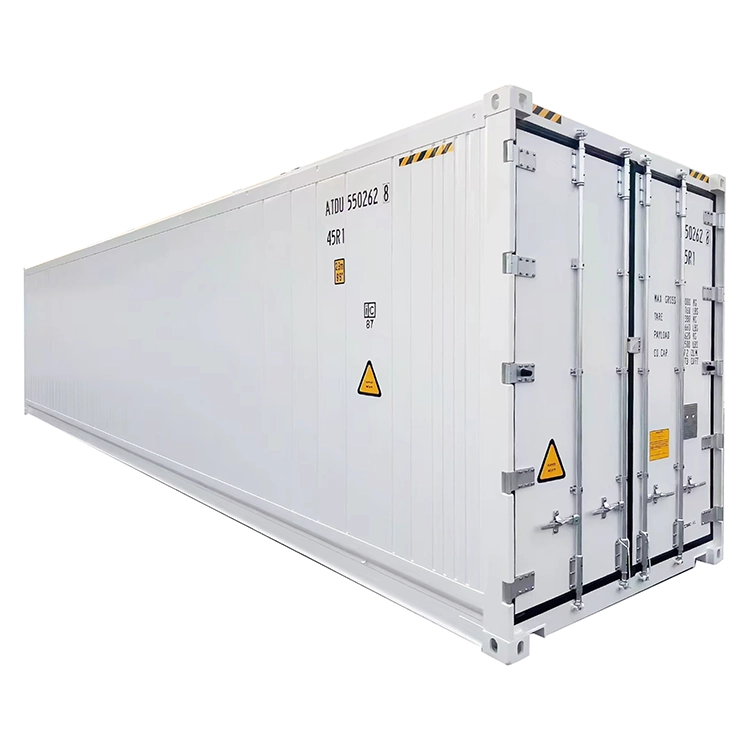
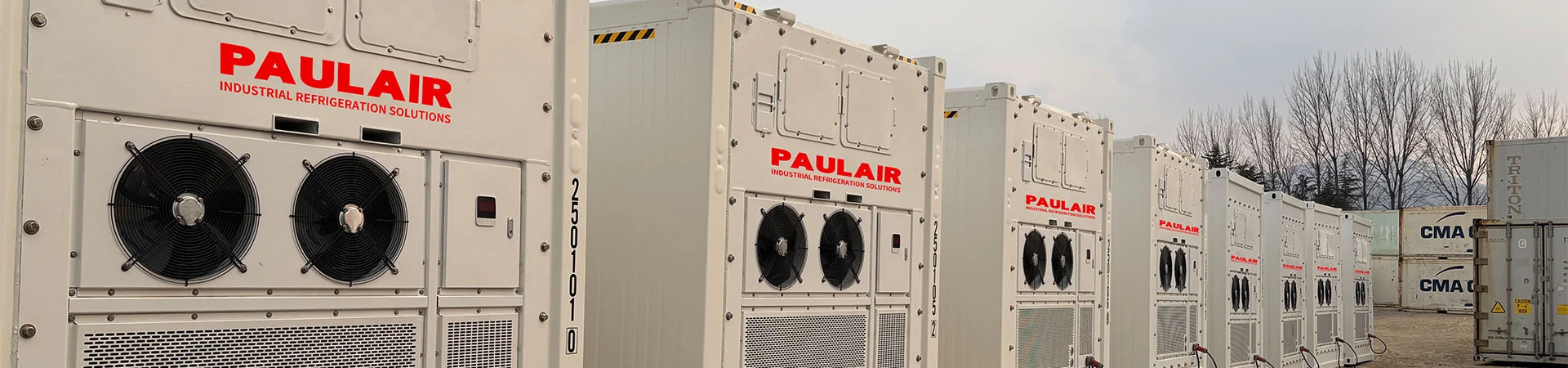


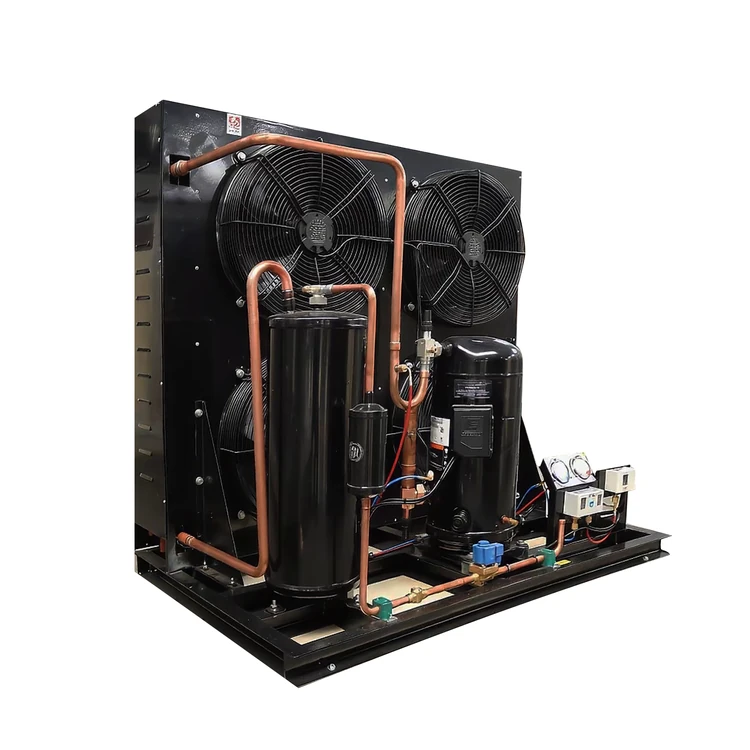
Low Temperature Refrigeration Unit
The Paulair low temperature refrigeration unit is mainly designed for applications that require deep cooling, such as frozen meat, aquatic products, frozen food, biological samples, and industrial low-temperature processes. The equipment is designed for the characteristics of high compression ratio, high operating load, and high system stability requirements in low-temperature environments. By reasonably matching compressors, refrigeration systems, and control schemes, we provide customers with low-temperature refrigeration solutions suitable for long-term operation.
In the cold chain industry, low-temperature refrigeration is not just about lowering the temperature, but maintaining stable operation in a lower temperature environment. Compared to ordinary refrigeration equipment, low-temperature refrigeration units need to face larger system pressure differentials, higher compression loads, and more complex operating conditions.
The Paulair low temperature refrigeration unit is mainly used in frozen storage environments below about -18 ℃, and can cover applications such as frozen product storage, quick freezing processing, ultra-low temperature storage, and industrial low-temperature cooling according to project requirements.
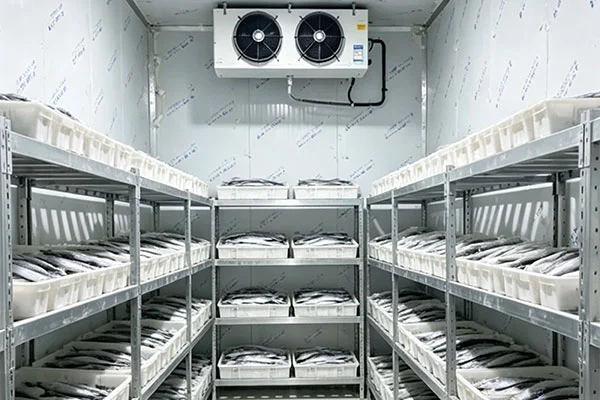
For frozen meat, seafood, frozen food and other products, a stable low-temperature environment directly affects the storage period and product quality. If the refrigeration system design is not reasonable, problems such as insufficient cooling rate, large fluctuations in storage temperature, and long-term high load operation of equipment may occur. Therefore, the core of low-temperature projects is not simply to choose "high-power equipment", but to match the system based on product characteristics, temperature requirements, warehouse structure, and operating conditions.


Why do low-temperature refrigeration systems require more professional design?
Under low-temperature conditions, the operating conditions of the refrigeration system are significantly different from those of ordinary refrigeration.
As the evaporation temperature decreases, the compressor needs to bear a higher compression ratio, which will affect the refrigeration efficiency. At the same time, oil return, defrosting, and system control will become more complex.
Therefore, low-temperature refrigeration equipment usually needs to focus on:
Compressor operating capability;
Matching of refrigeration system;
Return oil design;
Defrosting method;
Insulation structure;
Control system stability.
Paulair optimizes the refrigeration cycle, equipment configuration, and control logic according to different project requirements, enabling the unit to adapt to long-term low-temperature operating environments.
For large cold storage facilities, quick freezing production lines, and continuous operation projects, the company can adopt more suitable system solutions based on actual loads, including parallel compression, variable frequency control, etc., to improve equipment operation adaptability.
Low temperature solutions for frozen and quick freezing industries
In the food cold chain, different products do not have exactly the same temperature requirements.
For example, frozen meat, seafood, and pre made dishes usually need to be stored in a stable low-temperature environment; In the production process of frozen food, more attention is paid to quickly reducing the center temperature of the product; Some high-value aquatic products also require lower temperature conditions to reduce quality changes.
The Paulair low-temperature refrigeration unit can be configured according to the customer's production and storage process.
For food processing enterprises, equipment design needs to consider production pace, daily processing capacity, and freezing time; For cold chain logistics enterprises, it is necessary to focus on storage capacity, cargo turnover, and long-term operating costs.
Therefore, during the project design phase, the company will calculate the cooling capacity and select equipment based on the actual application conditions of the customer, rather than recommending equipment based solely on the cold storage area.
Equipment characteristics of low-temperature refrigeration units
The Paulair low temperature refrigeration unit can adopt different technical solutions according to different applications.
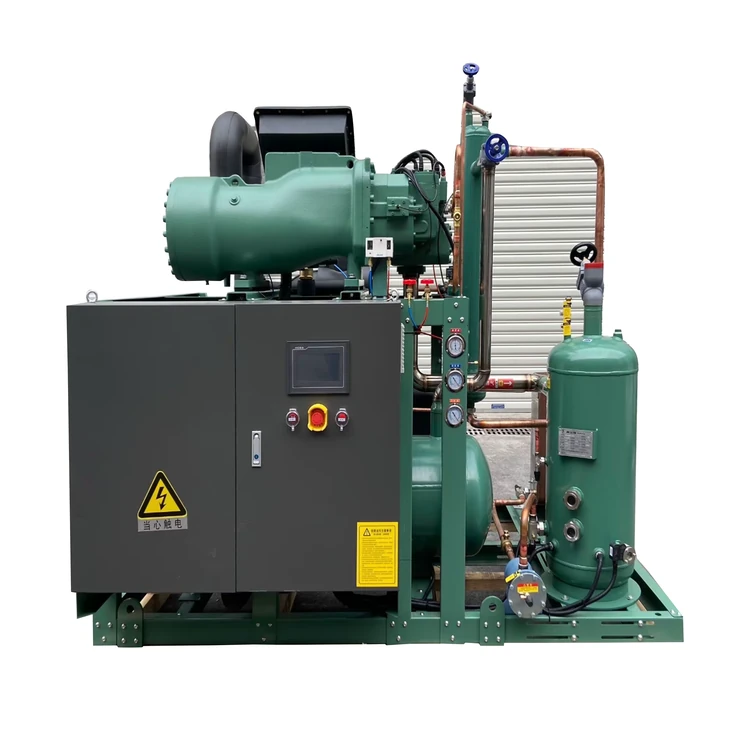
In small and medium-sized low-temperature cold storage projects, compressor configurations suitable for stable operation can be adopted; For large cold storage, quick freezing, and industrial projects, parallel systems or other combination schemes can be adopted according to the cooling capacity requirements.
The equipment can be combined with frequency conversion control and intelligent monitoring system to manage information such as compressor operation status, temperature changes, and equipment alarms.
Through intelligent control, the system can adjust its operating status according to actual load, reduce long-term full load operation of equipment, and improve energy utilization efficiency.
Factory manufacturing capability and quality control of low-temperature equipment
Compared to ordinary refrigeration products, low-temperature refrigeration equipment requires higher manufacturing processes and assembly accuracy.
Paulair has production and research and development bases in Jinan and Qingdao, with capabilities in refrigeration equipment design, manufacturing, system assembly, and testing.
In the production process of low-temperature units, the company focuses on the quality of refrigeration system connections, electrical control, safety performance, and overall operating status.
Before leaving the factory, the equipment will undergo:
Raw material and component inspection;
Refrigeration pipeline processing and system assembly;
Air tightness test of refrigeration system;
Stress testing;
Vacuum testing;
Electrical safety testing;
Refrigeration performance testing;
Complete machine operation testing.
Ensure that the equipment meets the installation and operational requirements of the customer's project through a complete testing process.
What projects are low-temperature refrigeration units suitable for?
Low temperature refrigeration units mainly serve industries that require sustained low-temperature environments.
In the food industry, it is commonly used in frozen meat warehouses, aquatic freezing warehouses, frozen food warehouses, pre packaged food freezing centers, and food processing enterprises.
In the field of medicine, it can be used for partial biological sample storage, special temperature controlled warehousing and other projects, and system design needs to be carried out according to specific product requirements.
In the industrial field, it can be applied to the low-temperature cooling needs in production processes such as chemical, pharmaceutical, and new materials.
For cold chain logistics enterprises, low-temperature units are also an important component of large-scale refrigerated storage centers and multi zone cold storage facilities.
What should be noted when selecting a low temperature refrigeration unit?
The selection of equipment for low-temperature projects requires comprehensive consideration of multiple factors.
Firstly, it is necessary to clarify the actual storage temperature of the product. For example, ordinary frozen storage and ultra-low temperature storage have completely different equipment requirements.
Secondly, it is necessary to calculate the actual heat load of the cold storage, including insulation of the storage body, temperature of goods entering the warehouse, personnel operation, equipment operation, and environmental impact.
In addition, equipment operating time, local climate conditions, power conditions, and ease of maintenance in the later stages also need to be considered.
Paulair can assist in designing refrigeration solutions based on project parameters provided by customers, including refrigeration capacity calculation, unit selection, system configuration, and operational recommendations.
Technical Specifications
| project | Parameter Description |
| Product Name | |
| Applicable temperature range | Freezing storage and low-temperature refrigeration applications |
| Common application temperature | -Design according to project requirements below 18 ℃ |
| Compressor type | Vortex, piston, screw and combination schemes are optional |
| System form | Single machine, parallel, customized low-temperature system |
| Control method | Conventional control, variable frequency control, and intelligent monitoring system are optional |
| application object | Frozen goods warehouse, quick freezing warehouse, industrial low-temperature cooling, etc |
| Service Content | Scheme design, equipment manufacturing, installation guidance, remote technical support |
The specific parameters need to be confirmed based on the size of the cold storage, target temperature, and operating conditions.
FAQ
What is the difference between a low temperature refrigeration unit and a regular refrigeration unit?
The main differences lie in operating temperature and system design requirements. Low temperature units need to operate under lower evaporation temperature conditions, with higher requirements for compressor capacity, system matching, and control stability.
Can low-temperature refrigeration units be used in quick freezing warehouses?
Okay. Quick freezing projects require the design of refrigeration schemes based on product types, freezing speed requirements, and production capacity. Some projects may require the use of higher configured low-temperature systems.
Why can't we simply choose high-power equipment for low-temperature cold storage?
The refrigeration system requires comprehensive matching. If the equipment is too large, it may lead to increased investment and decreased operational efficiency; If the equipment is insufficient, it may not be able to meet the requirements of cooling speed and temperature stability.
Do low-temperature units need regular maintenance?
Need. When low-temperature equipment operates for a long time, the refrigeration system status, filter components, electrical control, defrosting system, and equipment operating parameters should be regularly checked.
Can Paulair provide a comprehensive solution for low-temperature cold storage?
Okay. The company can provide refrigeration solution design, equipment production, system configuration, debugging guidance, and after-sales technical support according to customer project needs.
Send Inquiry
Contact Info
-
Address
Xinyuan Avenue, Sangzidian Subdistrict, Tianqiao Borough, Jinan City, Shandong Province, China
-
Tel
-
Submit your project specifications to receive tailored guidance, technical drawings, and cheap factory-direct wholesale pricing from our engineering team today.




News Recommendations