
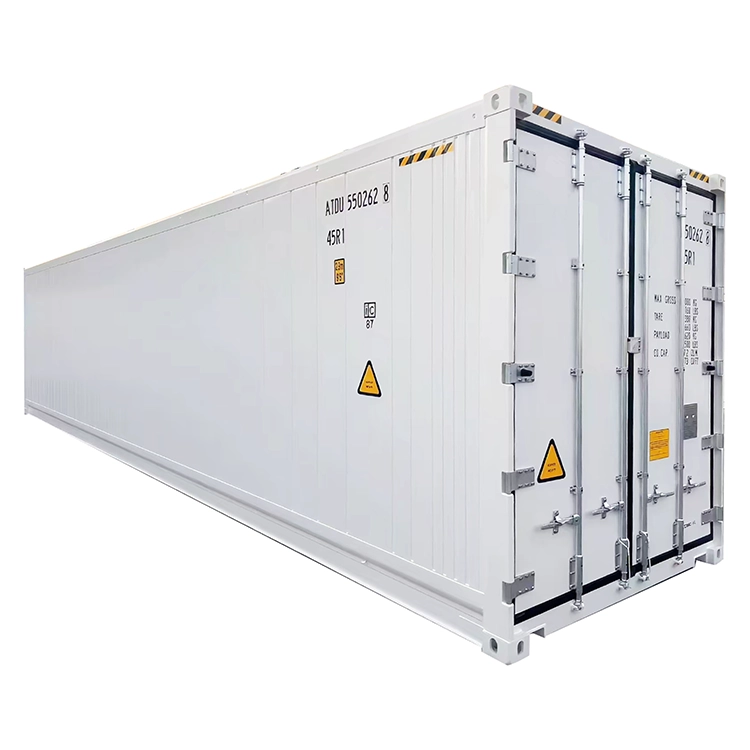


Container Blast Freezer Room for Fish
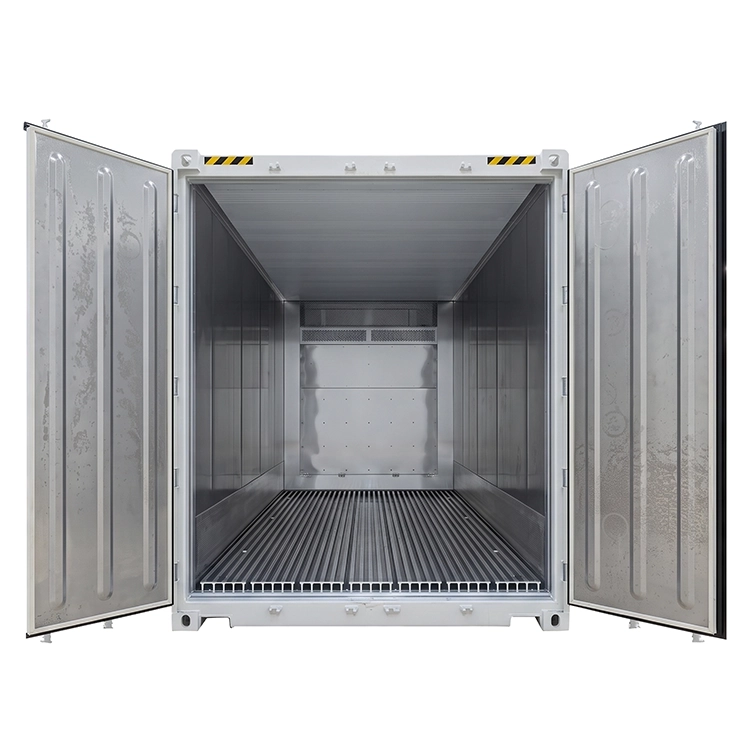
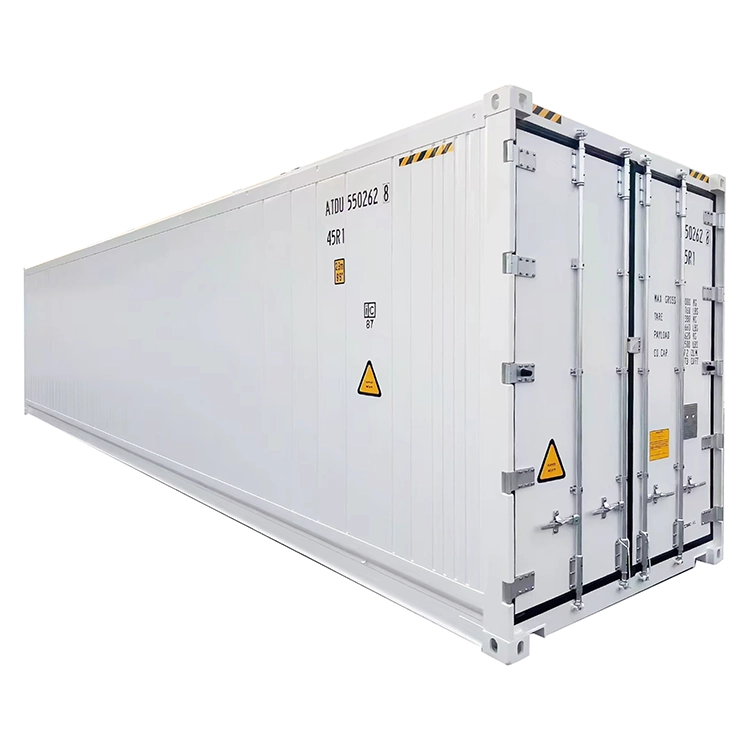
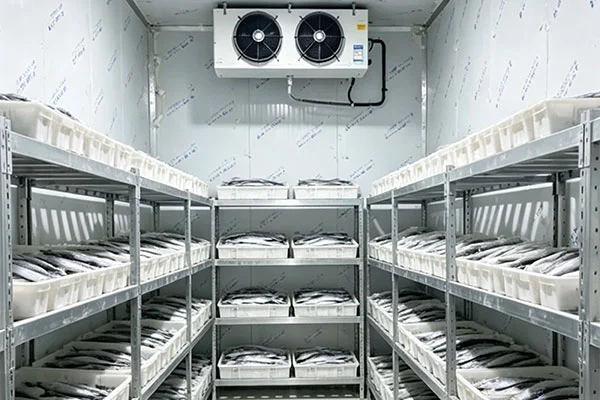
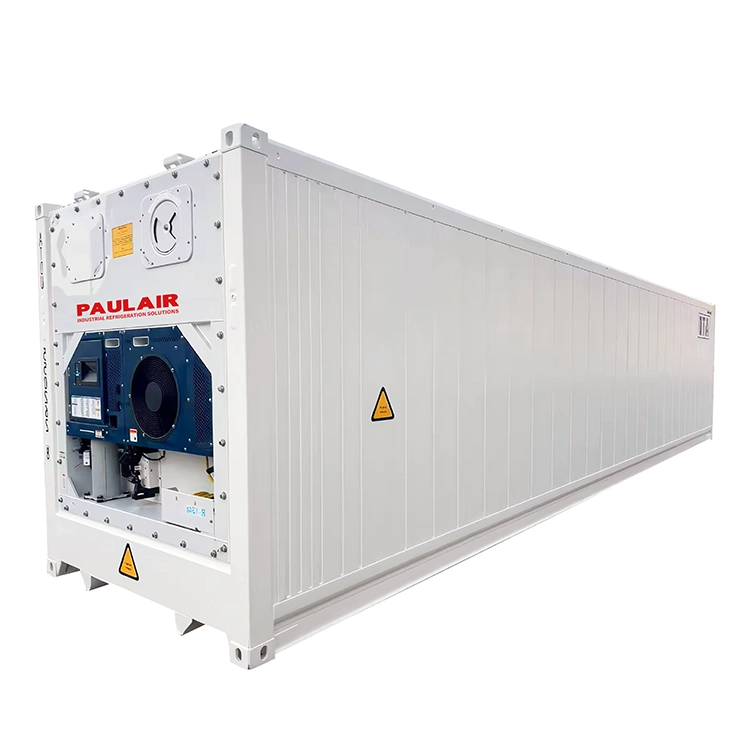
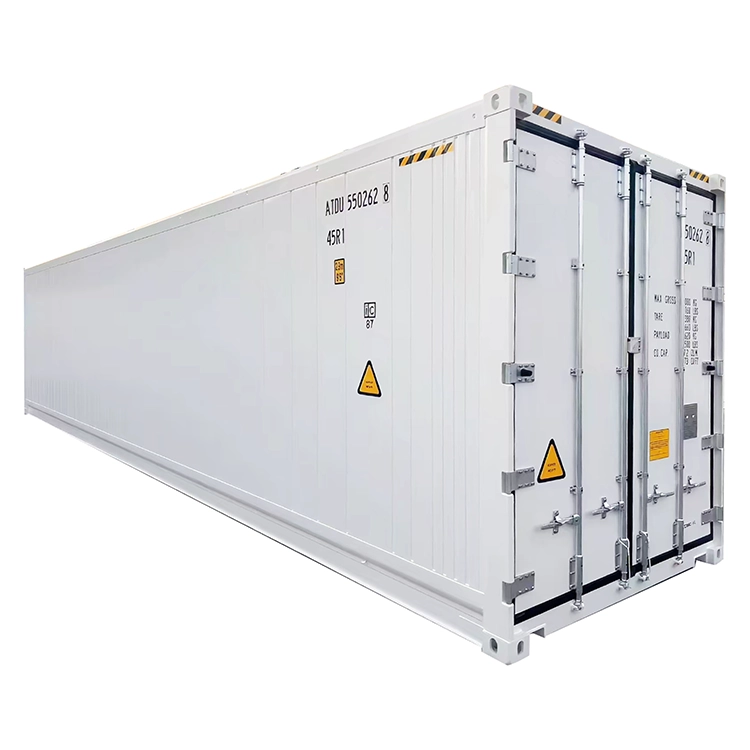
The Container Blast Freezer Room for Fish is suitable for long-distance transportation, port transshipment, and warehousing of frozen seafood such as salmon and cod. It operates within a temperature range of -20°C to -25°C, with a temperature fluctuation target of ±1°C. Equipped with ≥100mm PU insulation panels, double-sealed doors, and PLC control, the unit can be customized according to fish box dimensions with anti-slip, cushioning, partitioning, and light-blocking structures. Optional IoT monitoring and temperature logging are also available.
Deep-sea fish species such as salmon and cod have high fat content. For long-term freezing storage and transportation, not only is it necessary to maintain a stable low temperature, but also to reduce temperature fluctuations, light exposure, packaging damage and odor crossover risks. For scenarios such as long-distance shipping, port transshipment and frozen seafood storage, we design Container Blast Freezer Room for Fish from four aspects: temperature control, container insulation, loading protection and environmental isolation. And we adjust the internal structure and functional configuration according to the fish species, packaging form and transportation route.

Four engineering designs for deep-sea fish species
Maintain stable low temperature and reduce frequent temperature fluctuations
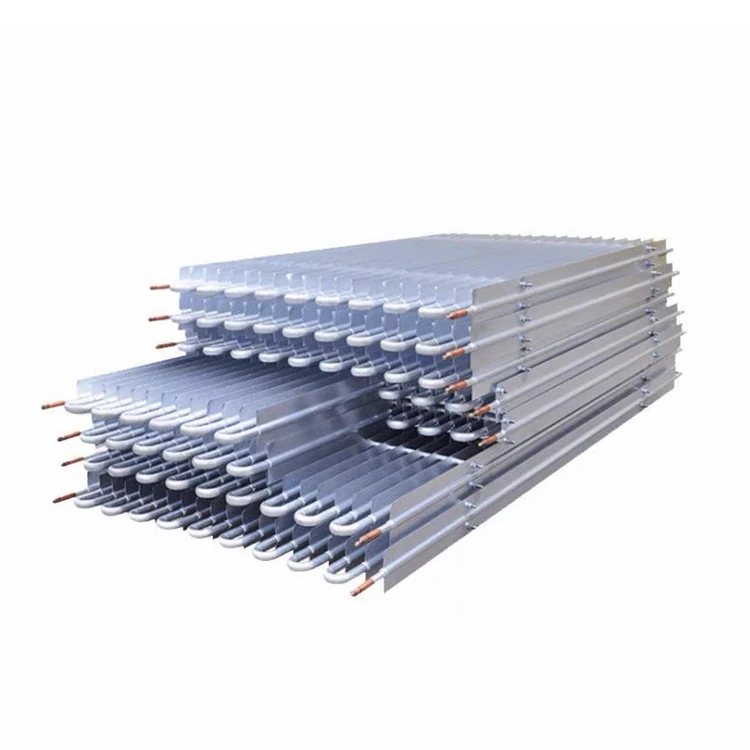
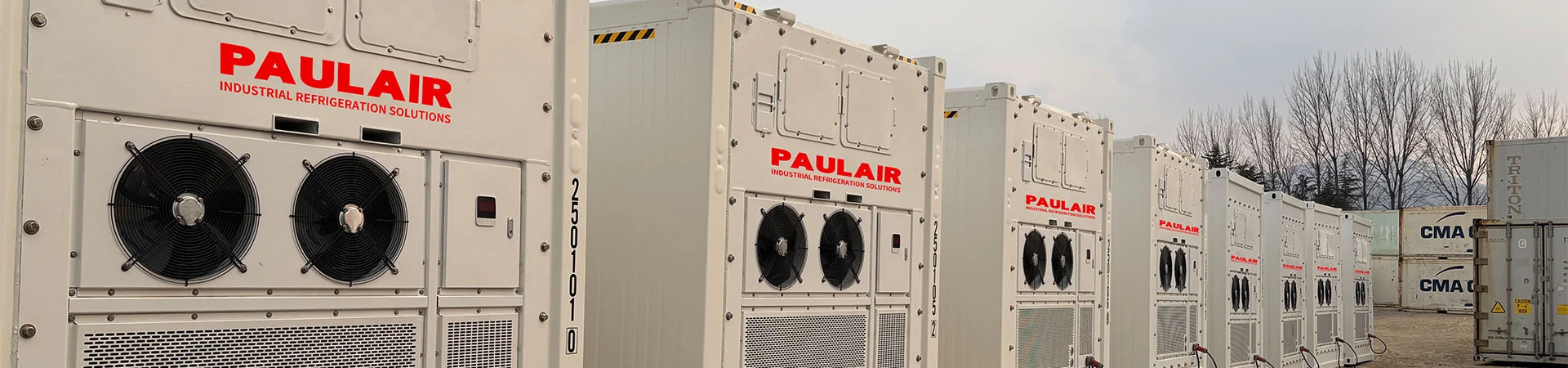
When transporting deep-sea fish over long distances, the key point of the equipment is not merely to aim for a lower temperature, but to maintain a stable frozen environment within the container during loading, transportation and opening. The equipment can be designed according to project requirements with an operating temperature range of -20℃ to -25℃, and the temperature fluctuation control target is ±1℃. The accompanying refrigeration unit continuously compensates for the heat load of the container and is suitable for long-distance frozen storage and transportation of fish products that have already undergone freezing treatment.
It should be noted that container cold storages mainly handle the maintenance of freezing conditions and the temperature management during transportation, and do not replace professional rapid freezing equipment.

Combined with proper packaging, it reduces the risk of color changes
Products such as salmon require high standards for appearance and color. In addition to low-temperature conditions, lighting during packaging and transportation also needs to be included in the overall design. Depending on the packaging method, a reinforced light-blocking structure can be configured, and it can be combined with opaque packaging. For projects that require long-term ocean transportation, an independent isolation structure can be further designed to keep the goods in a relatively stable and low-light storage and transportation environment.
Optimization of stacking for fish tanks and frozen fish packaging
When whole fish, fish sections, and fish slices are packaged differently, their stress distribution patterns are not the same. In the frozen state, the products are relatively hard, and vibrations and compressions during long-distance transportation may cause the cardboard box to deform, the packaging to be damaged, or even the edges of the fish to crack. Therefore, the internal loading design will be adjusted based on the size of the goods and the packaging form
Install anti-slip trays or support structures to reduce displacement during transportation.
Carry out reasonable layering and height-limiting design for the fish tank to prevent the bottom from constantly bearing excessive pressure.
For products that are prone to compression, such as fish fillets and fish sections, a buffering or partition structure can be added.
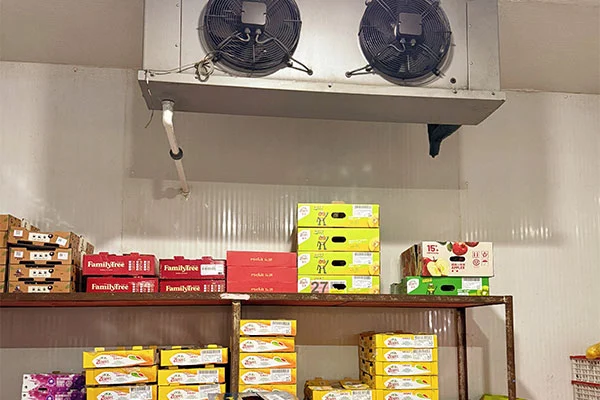
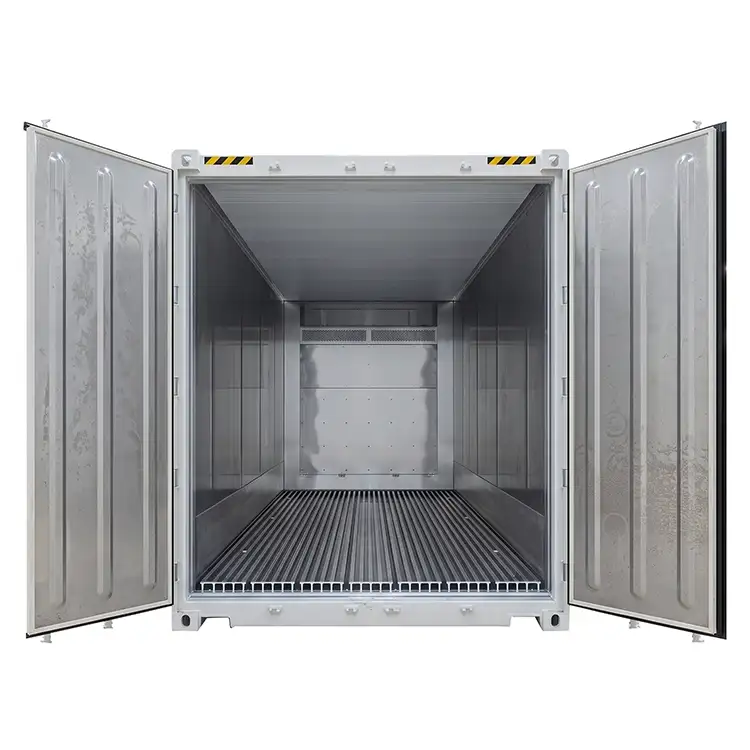
Maintain the designed cold air channels to avoid the formation of local cold air short circuits or cold spots and hotspots due to the pursuit of high loading rate.
This design focuses on enabling the loading structure, refrigeration airflow, and packaging protection to function simultaneously, rather than simply increasing the refrigeration power.

Sealing and odor isolation
Frozen fish have a distinct smell and need to be avoided from being mixed with other goods that are sensitive to odors during transportation. The container is of a sealed structure and can be equipped with odor isolation and internal physical partition designs according to project requirements. For specific transportation plans, the ventilation and air exchange configuration needs to be determined based on the actual goods, transportation method, and operation requirements of the cold storage, rather than simply closing all ventilation outlets permanently.

Core product configuration
| items | parameters |
| container cold storage size | 20ft / 40ft,and non-standard |
| Design operating temperature | -20℃ to -25℃ |
| Temperature control accuracy | ±1℃ |
| insulation material | High-density PU integral foaming insulation board |
| Insulation board thickness | ≥100mm |
| heat conductivity coefficient | ≤0.024 W/(m·K) |
| container cold storage door | Double sealing, with optional flexible door seal |
| control system | PLC Intelligent microcomputer control |
| control functions | Automatic defrosting, fault self-diagnosis |
| remote control | IoT optional |
| Temperature Recording | Full-process temperature recorder |
| Data management | Real-time upload, cloud-based trace back |
| Internal customization | Dividers, buffer supports, airflow optimization, etc. |
| Light-proof design | Customizable enhanced light-blocking module |
| Odor Control | Customizable sealed and physically isolated structure |
Insulation structure: Reduces heat loss during long-distance ocean transportation
For Container Blast Freezer Room for Fish, the insulation performance of the container body directly affects the heat load that the refrigeration system needs to compensate for. The equipment uses ≥100mm high-density PU integral foaming insulation board with a thermal conductivity of ≤0.024 W/(m·K), and is combined with double-layer sealed doors to reduce heat exchange between the container body and the external environment. Under different operating conditions such as land transportation, port waiting, or ocean transportation in hot regions, the insulation structure of the container and the refrigeration system need to be designed to match. For non-standard sizes or special transportation projects, the insulation and internal layout can also be reconfigured according to the actual container structure.

Refrigeration, control and temperature data
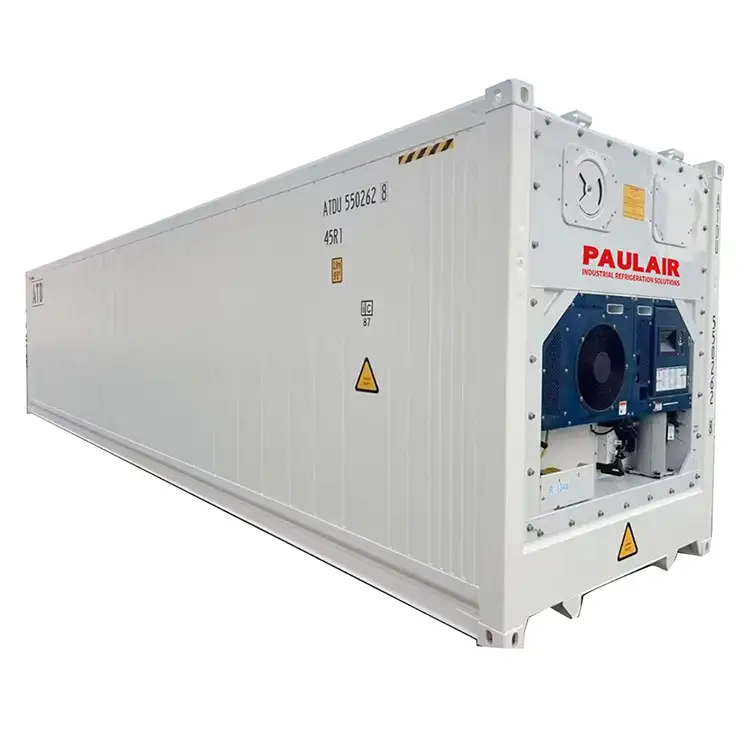
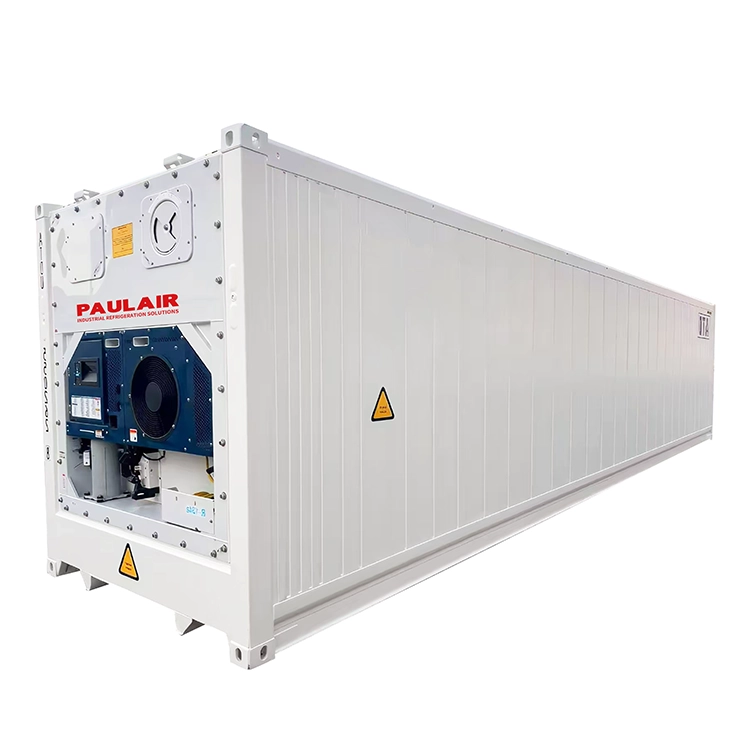
The PLC intelligent micro-computer electrical control box is responsible for the operation control of the equipment and can achieve automatic defrosting and self-diagnosis of faults. For the oceanic cold chain project, optional IoT remote monitoring and full-process temperature recording functions can be selected. The operating temperature and other data will be uploaded to the cloud and form historical records. This enables the expansion of equipment operation status from on-site manual inspection to remote viewing, facilitating the judgment of abnormal situations during transportation and subsequent data traceability.

Manufacturing and testing before leaving the factory
The Container Blast Freezer Room for Fish do not only rely on the parameters of the refrigeration units. The sealing of the container, insulation, air flow organization and long-term operational stability also affect the final usage effect. The following tests can be conducted before leaving the factory
72-hour continuous operation test
Under simulated full-load and significant temperature difference conditions, the continuous operation status and temperature control performance of the refrigeration system were verified.
Air tightness and water tightness testing
Check the sealing condition of the container body and all related connection parts to reduce the risks of cold leakage and water seepage.
CFD airflow simulation + actual measurement
Through fluid simulation combined with actual tests, the internal air ducts and airflow organization in the box were optimized to reduce local hotspots, cold spots and air flow dead zones. These test results can be correlated with specific equipment configurations, providing manufacturing basis for the structural adjustment of non-standard projects.

Applications
Oceanic fishing and cross-border cold chain logistics
It is used for the cold storage and transportation of fishery products during the process from fishing, port loading to cross-border transportation. For long-distance sea transportation, temperature recording and remote monitoring configurations can be added.
Port and logistics transfer
Container cold storage can be deployed as a temporary freezing storage space at ports, logistics parks or transfer areas, thereby increasing the available storage space when frozen goods arrive at the port in large quantities.
Frozen seafood storage and distribution
Suitable for frozen storage, regional distribution and supermarket pre-storage of salmon, cod and other deep-sea fish. Customized internal loading structures can be designed according to different packaging specifications.

Customized engineering services
We offer container cold storage services ranging from demand analysis, scheme design, equipment manufacturing, installation and commissioning to after-sales maintenance and repair. For the deep-sea fish project, the cooling, insulation, air flow, internal support and monitoring configurations can be adjusted according to the container size, cargo packaging, operating temperature, transportation route and loading method.
After the equipment is delivered, product manuals and usage instructions will be provided. In case of technical failures, authorized service agents in the corresponding region will be arranged to handle the issue; if urgent technical support is needed, the company's technicians can offer remote technical guidance and debugging support.

Certificates:


FAQ
Why do deep-sea fish need a freezing environment of -20℃ to -25℃
This plan can be designed to operate within the temperature range of -20℃ to -25℃ as per the project requirements. It is intended to maintain deep-sea fish that have already undergone freezing treatment. The actual operating temperature should be determined based on the species of the fish, the freezing process, the packaging method, and the transportation requirements.
Can a container cold storage directly freeze fresh fish to -25℃
The main purpose of a container cold storage is to maintain the low temperature of the frozen goods. If the goods need to be rapidly frozen from a fresh state, specialized rapid freezing equipment should be configured instead of relying on the transport container cold storage to complete the entire freezing process.
Can salmon and cod be processed using the same set of equipment
The same container cold storage can be adopted, but the specific operating temperature, packaging, loading method and internal structure need to be adjusted according to the actual products and transportation conditions. This does not mean that the two products can operate with exactly the same parameters.
Can the light-blocking structure be customized
Yes. The equipment can be configured with enhanced light-blocking structures according to the product packaging and transportation cycle, and can be used in conjunction with opaque packaging.
Can the temperature during the maritime transportation process be monitored
An IoT remote monitoring module and a full-process temperature recorder can be optionally equipped to enable data recording during operation, remote viewing, and cloud-based traceability.
Can the internal structure be designed based on the size of the frozen fish packaging
Yes. Internal anti-slip tray supports, buffer supports, partition structures, etc. can all be customized according to the packaging size and loading method of the goods.
engineering consulting
If the project involves ocean shipping, deep-sea fish freezing storage and transportation, port transshipment or pre-storage facilities for frozen seafood, we can design the container cold storage scheme based on the actual goods and transportation conditions, and determine the temperature, insulation, refrigeration, internal structure and data monitoring configuration.

Send Inquiry
Contact Info
-
Address
Xinyuan Avenue, Sangzidian Subdistrict, Tianqiao Borough, Jinan City, Shandong Province, China
-
Tel
-
Submit your project specifications to receive tailored guidance, technical drawings, and cheap factory-direct wholesale pricing from our engineering team today.
Related Products


News Recommendations