

Duct Type Air Conditioner
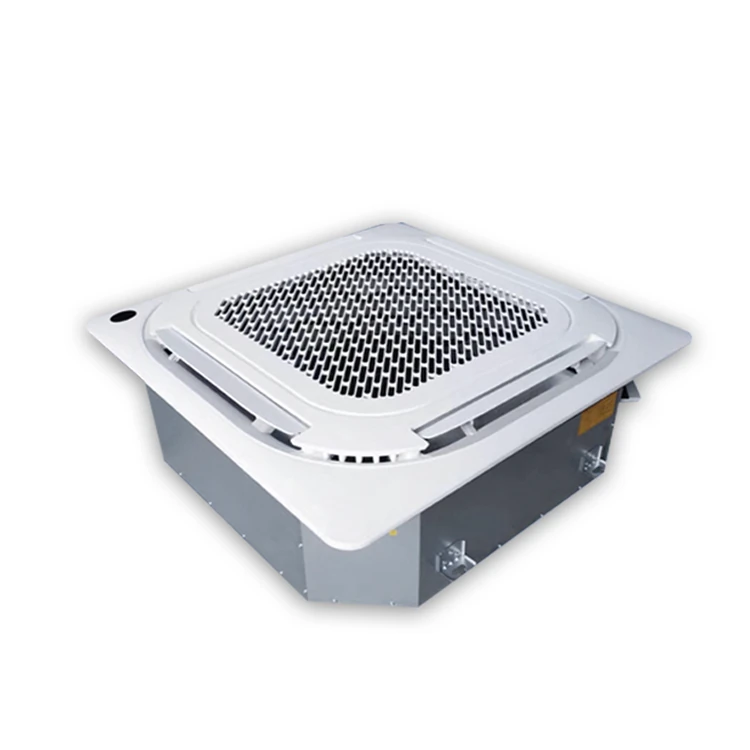
The Duct Type Air Conditioner adopts a hidden air duct installation method, which combines the air conditioning unit with the air duct supply, and can supply air to different areas according to the spatial layout. The common specifications of the product are 1-5HP, suitable for offices, restaurants, exhibition halls, factory office areas, sorting rooms and other places. The nominal power of a single photovoltaic module is 590W, and the photovoltaic power supply plan can be planned based on the building load, operating time, and roof conditions.
The Paulair Duct Type Air Conditioner is a concealed ceiling-mounted air conditioning unit that delivers conditioned air through ductwork to multiple outlets. Instead of mounting a wall unit in every room, one indoor unit is hidden above the ceiling and distributes air to the areas you designate during design.
It is built for projects where the air conditioning layout must follow the building layout, not the other way around: offices with partitioned rooms, restaurants with open dining areas, exhibition halls with display zones, factory office areas, sorting rooms, and long corridor-style spaces.
The unit can be configured with a photovoltaic direct-drive power supply. A single PV module is rated at 590 W and measures 2278 × 1134 × 30 mm. The number of modules is calculated together with the air conditioning load, daily operating hours, local solar conditions, and available roof area — not chosen independently.
Key Features
- Concealed installation. The indoor unit sits inside the ceiling. Only the air outlets and return grilles are visible, which keeps walls and business areas clear.
- Ducted multi-zone air supply. One unit feeds several outlets through a duct network. Outlet positions are planned according to room division and heat load.
- Photovoltaic direct-drive compatible. The system can be paired with PV modules to offset daytime operating load. Suitable for buildings with daytime-heavy usage.
- 1–5 HP range. Single-room projects typically reference 1–2 HP; multi-room or long-span projects reference 2–5 HP. Final selection depends on load calculation, not horsepower alone.
- Designed around the floor plan. Duct routing, outlet count, and static pressure are confirmed before production, so the equipment matches the building rather than forcing a standard layout.
Technical Specifications
| Parameter | Information |
|---|---|
| Product name | Duct Type Air Conditioner |
| Installation | Concealed duct installation inside ceiling |
| Power supply | Photovoltaic direct drive; system configuration confirmed per project |
| Common specifications | 1–5 HP |
| Single-room reference | 1–2 HP |
| Multi-room / long-span reference | 2–5 HP |
| Air supply method | Ducted supply |
| PV module nominal power | 590 W per module |
| PV module dimensions | 2278 × 1134 × 30 mm |
| Applicable spaces | Office, restaurant, exhibition hall, factory office area, sorting room, cold-chain auxiliary space |
| Installation requirements | Ceiling space, duct construction conditions, PV module installation area |
| Main features | Concealed installation, multi-zone air supply, PV power compatibility |
| Technical support | Equipment commissioning, operating parameter adjustment, system update guidance |
| After-sales service | Fault inspection, maintenance support, supply and replacement of damaged parts (excluding consumables) |
| Warranty | 12 months |
Note: Horsepower is for preliminary selection only. Final specifications are determined by actual building load. Customized cooling capacity, input power, static pressure, energy efficiency level, refrigerant type, and complete PV configuration are project-specific and confirmed during design.
How the System Works
The indoor unit draws return air from the conditioned space, passes it across the heat exchanger, and delivers cooled air into a duct plenum. From there, the air travels through the main duct and branch ducts to each outlet. The outlet size, position, and airflow direction are set according to the heat load and layout of each area.
On the power side, the photovoltaic modules convert sunlight into DC power. In a Paulair Duct Type Air Conditioner configured for PV direct drive, the PV output is matched to the air conditioning load through the system configuration. The match is calculated using the unit's rated input power, expected daily operating hours, local solar resource, installation angle, and shading conditions.
Two engineering points determine whether the system performs as designed:
- Static pressure vs. duct resistance. Long ducts, multiple bends, and narrow branches increase resistance. If the unit's available static pressure does not cover the duct network, airflow at the far outlets drops. This is checked at the design stage, not after installation.
- PV generation vs. load profile. A 590 W module does not produce 590 Wh every hour. Actual output varies with irradiance, weather, angle, and shading. For daytime-heavy spaces, the useful comparison is the match between PV generation and air conditioning load over the operating day — not the number of panels alone.


Production and Factory Testing
Each unit goes through the following stages before shipment:
- Incoming material inspection. Heat exchanger coils, fan assemblies, electrical components, and sheet metal parts are checked against specifications.
- Heat exchanger leak test. Coils are pressure-tested for leaks before assembly.
- Piping and refrigerant circuit check. Nitrogen pressure holding and vacuum checks are performed on the refrigerant circuit.
- Electrical safety test. Insulation resistance, grounding continuity, and wiring checks are carried out on the control box and power circuit.
- Airflow and static pressure verification. The fan and duct plenum are tested to confirm delivered airflow against the design point.
- Full-load running test. The assembled unit runs under load; operating parameters, noise, and vibration are recorded.
- Final inspection and packing. Accessories, installation documents, and labels are checked before packing.
Test records are kept by unit serial number. Each Paulair Duct Type Air Conditioner is tested by serial number, and test data can be referenced against the order. If you need specific test data or compliance documents for your market, state this in the inquiry so the correct documents can be prepared with the order.
How It Compares
| Consideration | Duct Type Air Conditioner | Wall-mounted split units | VRF / multi-split |
|---|---|---|---|
| Indoor appearance | Hidden in ceiling; only outlets visible | Wall units visible in each room | Indoor units visible in each room |
| Multi-room layout | One unit feeds multiple outlets via duct | One unit per room | One indoor unit per room |
| Ceiling space required | Yes — unit, duct, and maintenance access | No | Yes, but less duct space |
| Suitability for long-span spaces | Good — directional supply along the span | Poor — multiple units needed | Moderate — depends on piping route |
| PV direct-drive option | Available | Rarely available | Rarely available |
| Retrofitting existing ceilings | Needs ceiling height and access check | Easier | Needs ceiling and piping space |
This comparison is general. The right choice depends on ceiling height, room division, duct route, load profile, and whether the building can support PV installation.
Ordering Process
- Send the project information. Floor plan, room dimensions, ceiling height, intended use of each area, and roof conditions for PV.
- Receive a selection proposal. We confirm the unit capacity, duct route assumptions, outlet count, static pressure requirement, and PV module count.
- Confirm the technical configuration. Cooling capacity, input power, static pressure, refrigerant type, and PV configuration are fixed in the technical agreement. The Paulair Duct Type Air Conditioner configuration is fixed before production.
- Place the order and confirm production details. Drawings, labels, packaging, and document requirements are confirmed before production.
- Factory testing and shipment. Test records are prepared; shipping documents and installation documents are included.
If you only have a total floor area at the inquiry stage, we can still start the discussion, but the final selection cannot be fixed until room division and ceiling conditions are known.
What You Get Before Ordering
- A capacity and static pressure check against your floor plan, not a horsepower guess.
- Duct route and outlet position suggestions based on room layout and heat load.
- PV module count calculation based on load, operating hours, and roof area.
- A clear list of site conditions to confirm before shipment: ceiling height, maintenance access, condensate discharge, refrigerant pipe length, PV mounting area, shading, and power supply configuration.
- Straight answers on what the unit can and cannot do. For example, one unit cannot cover an unlimited number of rooms; duct length and static pressure set the limit.
Warranty and After-Sales Support
- Warranty period: 12 months.
- Remote technical guidance: equipment commissioning, online adjustment of operating parameters, and system update guidance.
- After-sales service: supply and replacement of damaged parts (excluding consumables), machine alarm inspection, maintenance support when the equipment cannot operate normally, and handling of quality issues unrelated to human factors.
- Refrigerant shortage: if shortage is caused by transportation or other non-human factors, replenishment or technical support can be provided.
- Scope: specific after-sales responsibilities and service scope are subject to the sales contract agreed by both parties.
Why Work With Paulair
- Selection is tied to the building. We ask for the floor plan and ceiling conditions because ducted systems fail at the design stage more often than at the equipment stage.
- PV and AC are calculated together. The PV module count is matched to the air conditioning load and operating profile, not sold as a separate add-on.
- Testing records are traceable. Each unit is tested by serial number, and test data can be referenced against the order.
- Boundaries are stated upfront. We tell you which parameters are fixed, which are project-specific, and which site conditions must be confirmed before installation.
Frequently Asked Questions
Can one duct fan supply air to multiple rooms at the same time?
Yes, air can be distributed to multiple areas through the duct system. The number of rooms that can be covered depends on unit cooling capacity, duct length, available static pressure, and the cooling load of each room. Multi-room projects need to be designed against the floor plan.
Does duct length affect cooling performance?
Yes. Excessive duct length, too many bends, or an unreasonable route increase air supply resistance and reduce airflow at far outlets. For long-span or multi-room projects, confirm the duct route and static pressure requirement before ordering.
Can it be installed in an office that has already been renovated?
It can be evaluated, but ceiling height, equipment installation space, access port location, and condensate discharge conditions must be checked first. If ceiling space is insufficient, the concealed installation plan may need adjustment.
Can a 590 W PV module generate 590 Wh per hour?
No. 590 W is the nominal power under standard test conditions. Actual output varies with solar irradiance, weather, installation angle, and shading. System sizing should use local sunshine data and the actual load profile.
What should be confirmed before installing a duct fan in a restaurant?
Restaurant occupancy is usually dense, and kitchen and lighting equipment add heat load. Selection cannot be based on floor area alone as if it were a regular office. Air outlet positions should also be checked against the decoration layout and kitchen exhaust arrangement to avoid short-circuiting or blocked supply.
What site conditions should be confirmed before purchase?
Ceiling installation height, maintenance access port, duct direction, condensate discharge location, refrigerant pipe length, roof PV installation area, shading conditions, and the power supply configuration for both the air conditioning and PV systems. Confirming these before shipment reduces rework after the equipment arrives.
Send Inquiry
Contact Info
-
Address
Xinyuan Avenue, Sangzidian Subdistrict, Tianqiao Borough, Jinan City, Shandong Province, China
-
Tel
-
Submit your project specifications to receive tailored guidance, technical drawings, and cheap factory-direct wholesale pricing from our engineering team today.
Related Products
News Recommendations