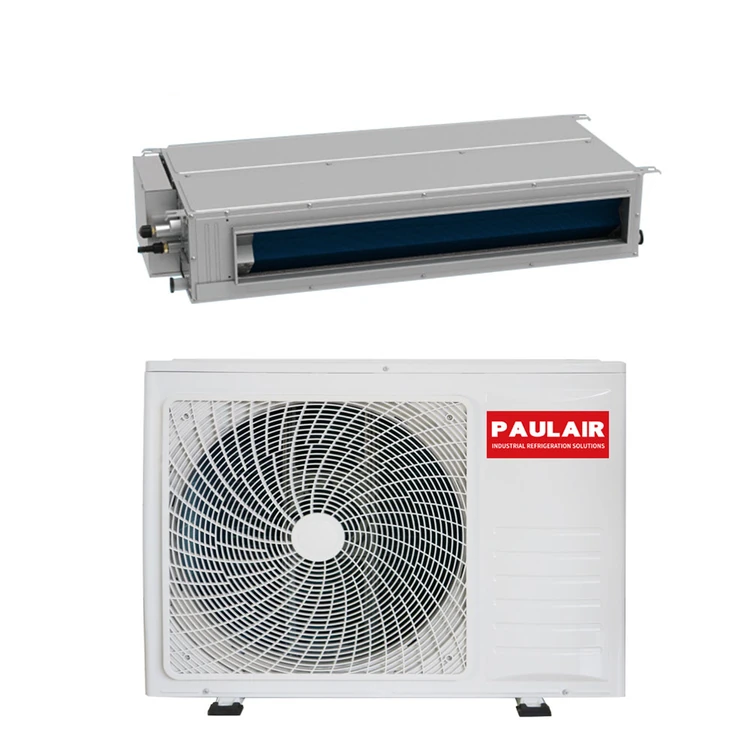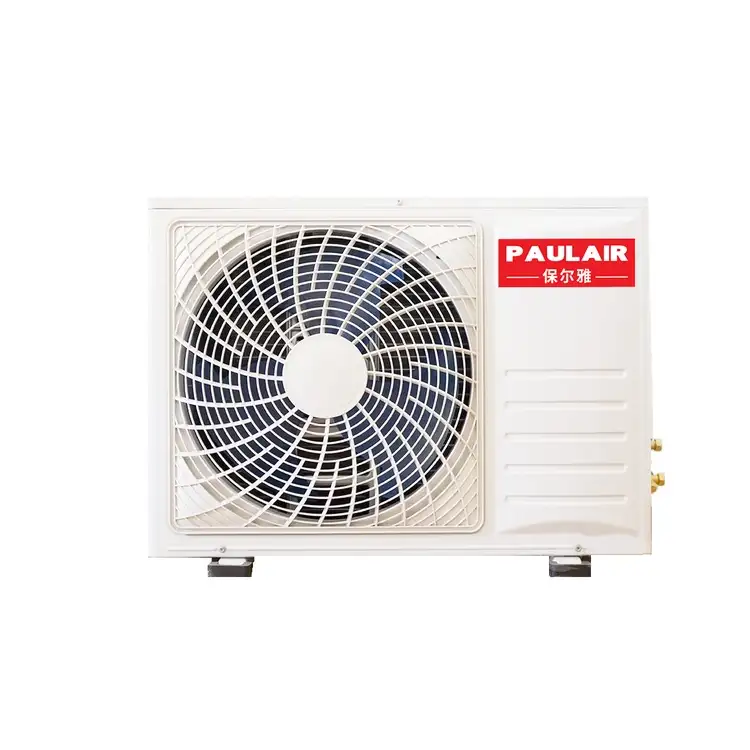


The Paulair Solar Energy Ceiling Air Conditioner is built for commercial interiors such as shops, offices, meeting rooms, exhibition halls and factory office areas. It combines a concealed ceiling air conditioner indoors with a photovoltaic power supply on the roof, so part of the daytime cooling load can be covered by on-site solar generation. Standard capacities run from 2 to 5 HP, and the unit supports four-sided or eight-sided air discharge to suit different ceiling layouts, cooling loads and roof conditions. For buildings where the air conditioning runs mainly during the day and where the roof can take a photovoltaic array, this solution lets you work out how much of the daily operating cost can realistically be offset by solar power — before you commit to a budget.


Ceiling space and air outlet layout
Choosing air conditioning for a commercial building is not only a question of cooling capacity. The ceiling structure, the indoor layout and future maintenance access all decide whether the installation works in practice. The Paulair Solar Energy Ceiling Air Conditioner uses a concealed installation method: the indoor unit sits inside the ceiling, which frees up wall space and suits interiors where decoration and space utilisation matter.
Four-sided or eight-sided air discharge depends on the specific model you select. When planning the installation position, take into account the length and width of the room, the ceiling height, the distribution of people and the seating layout, so that air outlets are not blocked by lamps, partitions or other equipment. Leave enough room inside the ceiling for equipment maintenance, and plan the condensate water drainage and refrigerant piping in advance rather than after the ceiling is closed.
Solar energy power supply configuration
The unit can be used together with the direct drive photovoltaic solution. Each individual photovoltaic module measures 2278 × 1134 × 30 mm and carries a nominal power of 590 W. Actual power generation is affected by sunlight intensity, installation angle, shading and weather, so the power of a single module alone does not tell you whether it can meet the operating requirements of the whole air conditioner.
For commercial shops, office buildings and park structures that operate during the day, the photovoltaic requirement can be calculated from the input power of the air conditioners, the average daily operating time, local sunlight conditions and the available roof area. If the project also needs supplementary power from the grid or energy storage support, confirm the complete power supply structure, the control method and the equipment supply scope for the whole system before the quotation — not after the order is placed.
Cooling capacity and project selection
The Paulair Solar Energy Ceiling Air Conditioner is commonly specified from 2 to 5 HP. For small offices or shops, 2 to 3 HP is a reasonable preliminary reference; for medium-sized spaces, 3 to 5 HP can be considered; for larger areas, the number of units or a multi-unit scheme should be evaluated against the actual load. Cooling capacity on its own does not decide whether the equipment is suitable — glass curtain walls, personnel density, lighting equipment, office computers and local outdoor temperature all change the cooling load. Providing room dimensions, building usage, design temperature and daily usage periods allows the equipment specification to be confirmed properly, which reduces the risk of undersized cooling or an oversized, overpriced configuration.
Key specifications at a glance
| System type | Concealed ceiling air conditioner with direct drive photovoltaic power supply |
|---|---|
| Capacity range | 2 – 5 HP |
| Air discharge | Four-sided or eight-sided, depending on model |
| Indoor unit installation | Concealed inside the ceiling |
| Photovoltaic module size | 2278 × 1134 × 30 mm |
| Photovoltaic module nominal power | 590 W per module |
| Typical applications | Shops, offices, meeting rooms, exhibition halls, park and factory office areas, schools and hospitals |
| Warranty period | 12 months |
| Guarantee period | 12 months |
Which projects are suitable for a solar ceiling air conditioner
Shops and showrooms: concealed installation suits spaces where the indoor display effect matters. Where business hours are concentrated during the day, the match between photovoltaic generation and air conditioning load can be assessed in more detail.
Offices and meeting rooms: the ventilation type and cooling specification can be selected according to the number of people, the room layout and the time period in which the room is used.
Park and factory office areas: for buildings with rooftop solar panel installation conditions, the air conditioning load can be folded into the overall electricity plan, and the initial investment and long-term operating cost of an ordinary air conditioning solution can be compared directly with the solar power supply solution.
Public buildings such as schools and hospitals: what needs verifying first is the ceiling space, maintenance passages, operation periods and electrical requirements of the project. The equipment and photovoltaic system configurations follow from those answers.
What to confirm before you buy
A Paulair Solar Energy Ceiling Air Conditioner project does not stop at the air conditioning main unit. It may also involve photovoltaic modules, supporting electrical equipment, installation materials and on-site construction. To get an accurate quotation and a clear supply boundary, confirm the following before ordering:
- Building purpose, room area, floor height and estimated number of occupants
- Required air conditioning capacity, operating duration and cooling demand
- Usable roof area, sunlight shading and conditions for installing photovoltaic components
- Required power supply method, and whether energy storage or backup power is needed
- Whether the procurement scope includes photovoltaic modules, control equipment, mounting accessories and technical support
These details are what make the supply boundary and the project budget transparent. The actual energy-saving effect of the photovoltaic system should be evaluated against local electricity prices, solar resources, equipment power and operation records. Without that data, no fixed energy-saving ratio or investment payback period should be promised to you — and it will not be promised here.
Why buy from Paulair
- Selection support before the quotation: send the project location, building area, floor height, estimated operation time and roof conditions, and the equipment quantity and photovoltaic configuration can be narrowed down against your actual load instead of guesswork.
- A supply scope stated up front: whether the quotation includes photovoltaic modules, control equipment, energy storage, installation materials and on-site installation is confirmed in writing, so different suppliers can be compared on the same basis.
- Remote technical support: equipment commissioning, adjustment of operating parameters and guidance for system updates.
- After-sales service: inspection and repair of non-human quality issues, troubleshooting of equipment alarms, repair support when the equipment fails to operate normally, and supply and replacement of related damaged components (excluding consumables).
- Refrigerant handling: where refrigerant loss occurs due to transportation or other reasons, supplementary handling or technical support is provided according to the actual situation.
- 12-month warranty and 12-month guarantee period: the specific service scope and liability determination are subject to the terms of the sales contract.
FAQ
What is the suitable area for a solar ceiling air conditioner?
Common specifications range from 2 to 5 HP. The applicable area still depends on room height, insulation conditions, glass area, personnel density and the heat generation of the equipment in the room. Providing the building dimensions and usage conditions so that the required cooling capacity can be calculated is more reliable than selecting on floor area alone.
How many 590 W photovoltaic modules are needed for the installation?
The number of modules is determined by the input power of the air conditioner, sunlight conditions, average daily operating time and the system design. 590 W is the nominal power of a single module and does not mean the module will consistently generate 590 Wh of electricity every hour. The module count and the complete system configuration should be confirmed before the formal purchase.
Can an existing office building be equipped with this system?
An initial assessment is possible, but sufficient installation and maintenance space inside the ceiling has to be confirmed first. Condensate water drainage, refrigerant piping and the installation position of the photovoltaic components also need checking. If the building has no available roof or other suitable photovoltaic installation site, a different power supply plan has to be evaluated.
Does the product include photovoltaic panels and the corresponding electrical equipment?
Published information covers the parameters of the photovoltaic modules; the standard supply scope of the complete equipment is not fixed by default. When making an inquiry, confirm whether the quotation includes photovoltaic modules, control equipment, energy storage equipment, installation materials and on-site installation services, so that the quotation standards from different suppliers stay comparable.
What kind of support is available if the equipment malfunctions?
Remote debugging, parameter adjustment, system update guidance, alarm troubleshooting and maintenance support are provided, together with the corresponding damaged parts as agreed. The warranty period and guarantee period are both 12 months, and the specific service conditions are subject to the contract.
How do I obtain project selection and a quotation?
For a store, office, exhibition hall or park project, send the project location, building area, floor height, estimated operation time and photovoltaic installation conditions. With that information the equipment quantity, photovoltaic component configuration and project supply requirements can be discussed further, which clarifies the technical requirements and procurement scope at the quotation stage.