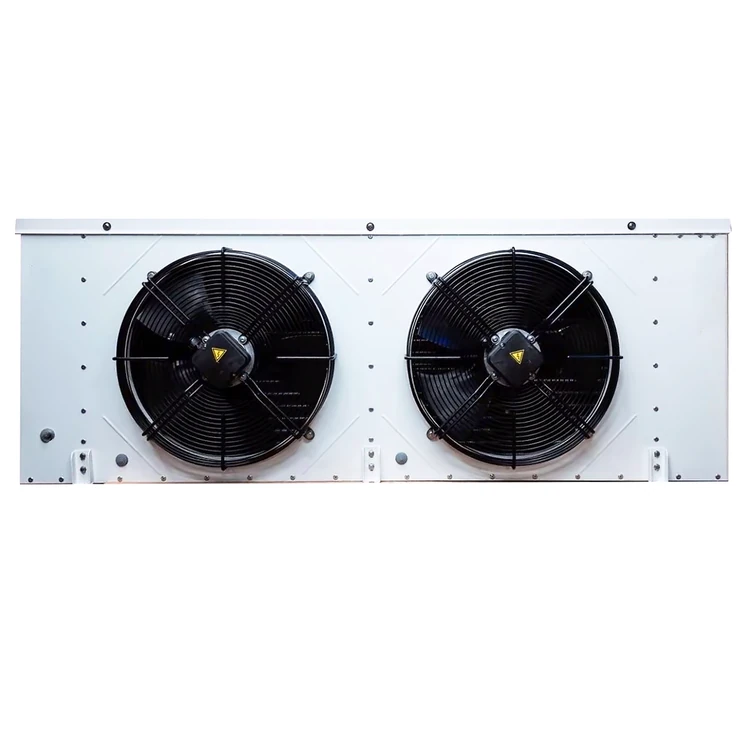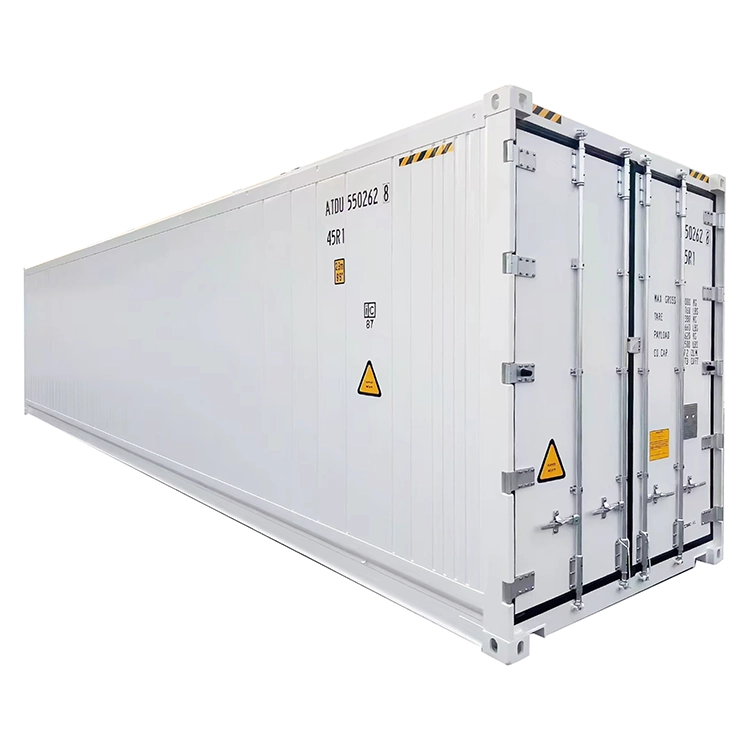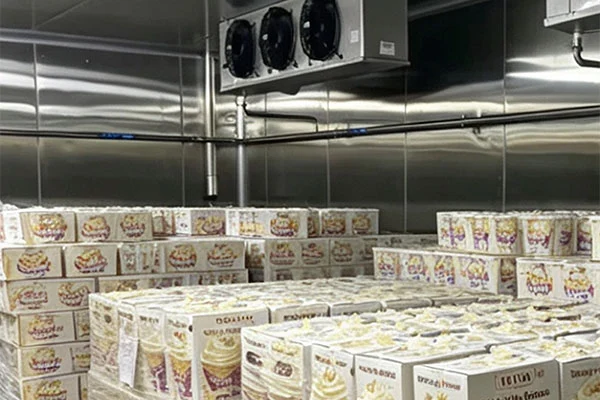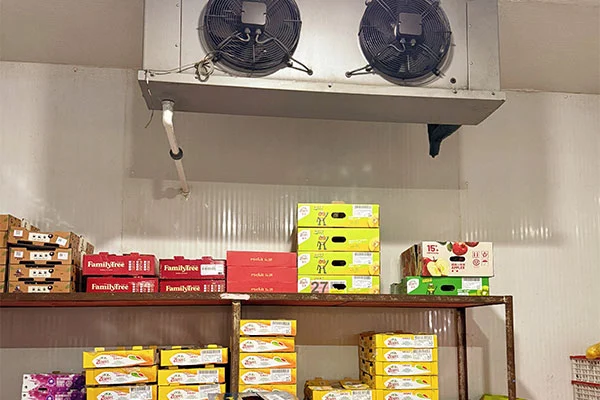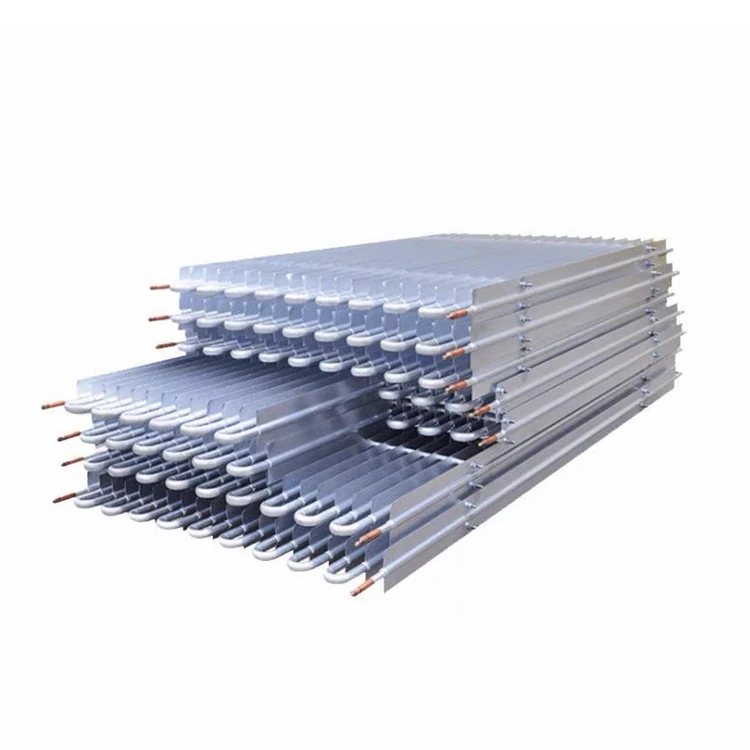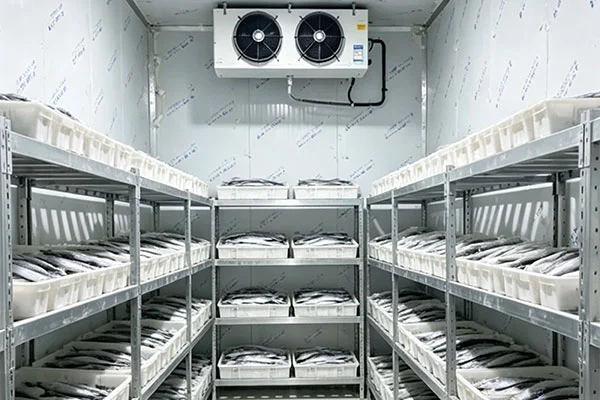
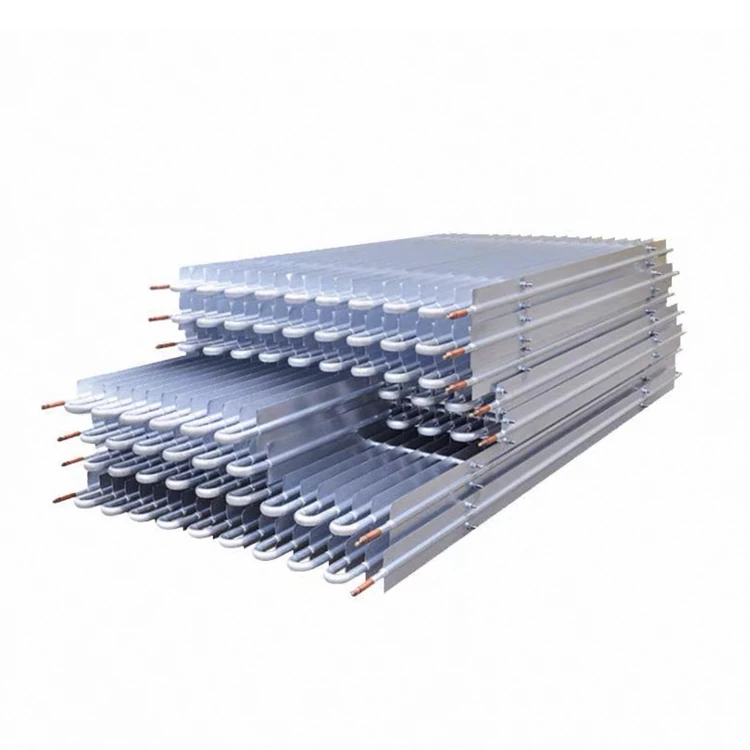
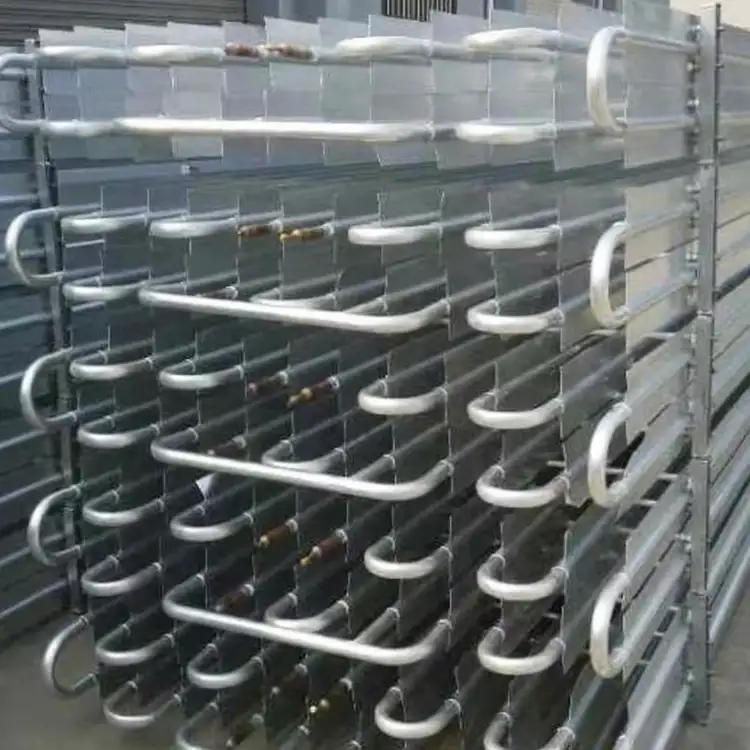
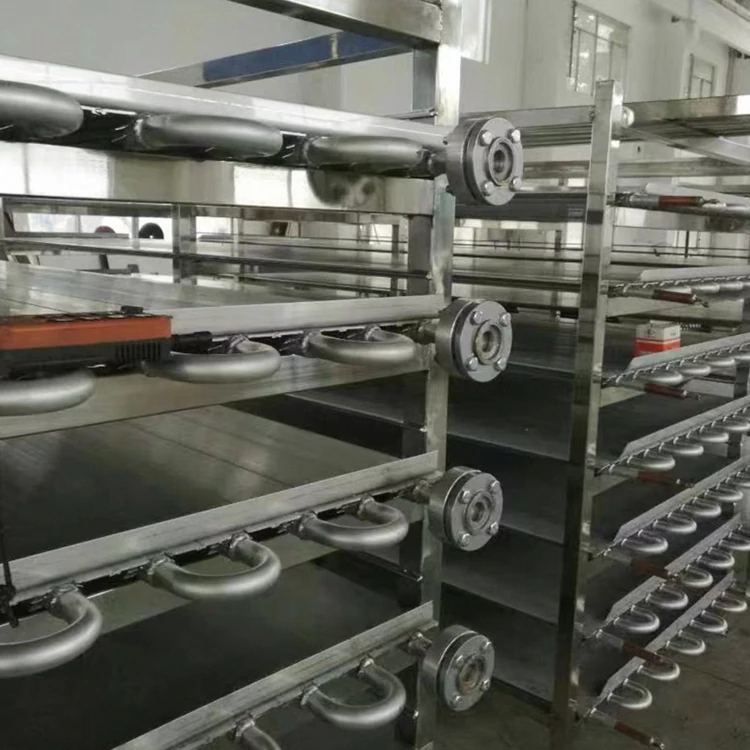
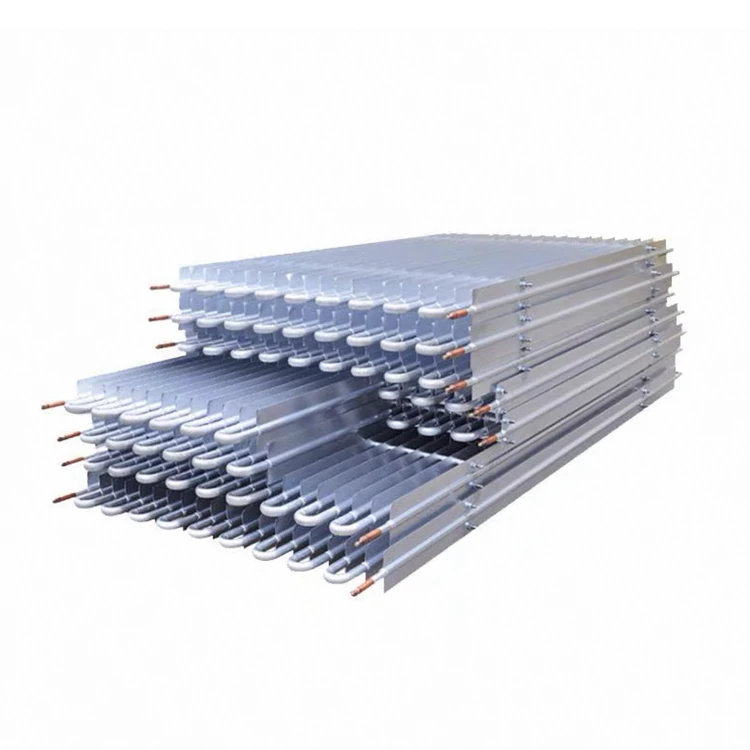
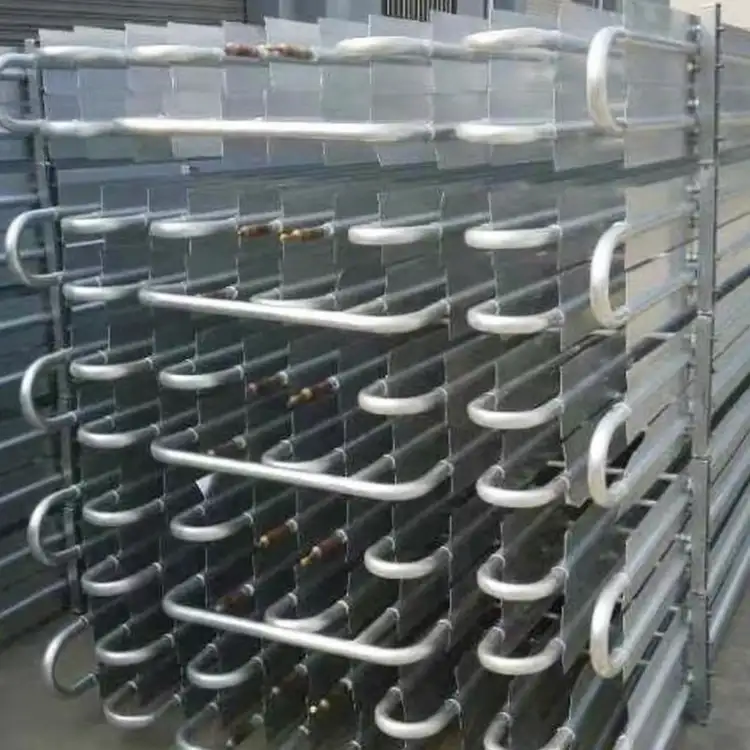
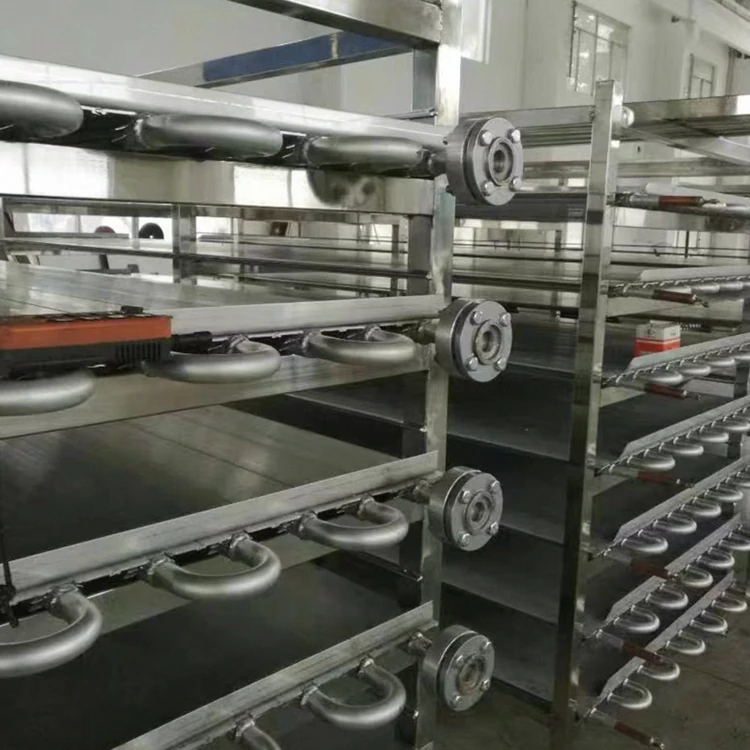
A Container Refrigeration Room Aluminum Finned Tube is a natural-convection aluminum evaporator installed inside a cold room. Refrigerant boils inside the aluminum tubes, and the aluminum fins bonded to those tubes absorb heat from the still air of the room. Because there is no axial fan, air moves by natural circulation only: cooled air sinks along the coil surface, and relatively warmer air rises from the stored goods and drifts back across the fins.
What that means for the operator is straightforward. There is no fan noise inside the room, no constant forced air stream drying out the surface of unpackaged goods, and no fan motor to burn out or to maintain. For storage rooms where goods stay in place for weeks or months and the priority is a steady room temperature rather than a fast pull-down, this coil type is a practical fit.
Typical deployment: low-temperature freezer rooms for frozen products, meat and seafood, long-term holding warehouses, meat and aquatic product processing areas, back-of-house catering storage, and large frozen food storage projects.
Key Characteristics You Can Plan Around
- No evaporator fan, no fan noise. Heat exchange is driven by natural convection, so the room stays quiet and there is no airflow-induced vibration.
- Lower moisture loss on stored goods. Without a fan continuously sweeping the product surface, surface dehydration on unpackaged meat, fish and frozen goods is reduced.
- Stable room temperature. The large radiant/convective surface of the aluminum coil holds temperature evenly, which suits long-term storage rather than rapid chilling.
- Aluminum construction. Aluminum tube and fin bundle keeps weight down and resists corrosion in humid cold-room air; no painted steel surface to rust through.
- Variable fin spacing. Wider fin pitch at the leading rows and tighter pitch at the rear rows helps delay frost bridging and lengthens the interval between defrost cycles.
- Made to the project, not to a stock size. Tube length, row count, fin pitch, circuiting, connection position and defrost arrangement are set from the room data you provide.
- No refrigerant distribution air ductwork required. The coil is hung or wall-mounted directly, so the room layout stays clear for racking and pallet handling.
Technical Specifications
The values below are the normal engineering range. The final drawing and rating are issued against your room data and refrigeration unit, not against a catalogue page.
| Heat exchange area | 15–40 m² (small rooms) · 40–100 m² (medium rooms) · 100 m² and above for large rooms, sized on actual load |
|---|---|
| Tube material | Aluminum 1060 / 3003 |
| Tube diameter × wall | Φ19 × 1.0 mm standard; Φ16 / Φ22 / Φ25 available |
| Fin material and thickness | Aluminum fin, 0.35–0.6 mm |
| Fin pitch | 8–20 mm, variable pitch available for frost-prone rooms |
| Row count | 2–12 rows |
| Design pressure | 2.5 MPa standard; higher pressure versions available on request |
| Pressure test | Nitrogen holding test at 2.8 MPa, minimum 24 hours, no pressure drop accepted |
| Refrigerant compatibility | R404A, R507A, R448A, R449A, R22 and equivalents — confirm at order stage |
| Defrost | Electric heater defrost or hot-gas defrost |
| Mounting | Ceiling suspended or wall mounted |
| Room temperature range | Typically −25 °C to +10 °C, matched to the duty |
| Connection | Brazed or flare connection, position set per layout drawing |
How It Works, and How It Compares With a Fan-Type Air Cooler
Low-pressure refrigerant enters the coil through the distributor, evaporates along the tube circuits while absorbing heat through the fin surface, and leaves as superheated vapor toward the compressor. Frost builds on the fins as moisture from the room air freezes on the cold surface, so a defrost cycle — electric or hot gas — runs on a timer or on a demand signal. Drain water from defrost must be piped out of the room, and that pipe run needs to be planned at the layout stage.
A Container Refrigeration Room Aluminum Finned Tube is not a drop-in replacement for a forced-air unit. The two solve different problems, and the table below is a fair comparison for selection purposes.
| Item | Aluminum finned tube (natural convection) | Fan-type air cooler |
|---|---|---|
| Air movement | Natural convection, no fan | Forced circulation by fan |
| Noise in the room | None from the coil | Continuous fan noise |
| Moisture loss on goods | Low | Higher, especially on unpackaged goods |
| Pull-down speed | Moderate | Fast |
| Best suited to | Long-term holding, stable temperature | Fast chilling, frequent goods movement |
| Moving parts | None | Fan motors and blades |
| Footprint in the room | Hangs on ceiling or wall, no air duct | Requires unobstructed air throw path |
If your project requires rapid pull-down, very frequent goods in and out, or a specified air circulation velocity, compare the aluminum coil against a forced-air unit before committing — in those cases the fan-type unit usually wins.
How It Is Built and How It Is Tested
Every coil goes through the same sequence before it is allowed to leave the workshop:
- Drawing release. Coil geometry, circuiting and connection positions are fixed from the approved layout drawing.
- Tube and fin preparation. Aluminum tube is cut, bent and cleaned; fins are punched to the specified pitch, with variable pitch applied where required.
- Fin-to-tube bonding. Mechanical expansion bonds the fin collar to the tube wall, so the fin and tube act as one heat-transfer surface rather than two loosely touching parts.
- Header and connection fabrication. Distributor, headers and nozzles are brazed under controlled atmosphere.
- Pressure test. Nitrogen holding test at 2.8 MPa for at least 24 hours; any pressure drop means rejection and rework.
- Leak detection. Soap solution or helium detection on all brazed joints and connections.
- Defrost and electrical check. Heater elements, wiring and terminal boxes are checked for continuity, insulation resistance and correct rating.
- Dimensional and cleanliness check. Overall dimensions, connection positions, fin pitch and internal cleanliness verified against the drawing; tube ends are capped for transport.
Test records for the pressure holding test and the electrical check are kept against the order number and can be supplied with the shipment on request.
How to Size It Correctly
Heat exchange area cannot be set from room volume alone. Two rooms of identical size can need different coil areas if the storage temperature, the goods, the incoming goods temperature or the door traffic are different. To issue a workable proposal, the following information is what actually drives the calculation:
- Room internal length, width and height
- Design storage temperature and required tolerance
- Type of stored goods and average daily intake volume
- Temperature of the goods at the moment they enter the room
- Refrigeration unit model, capacity and refrigerant type
- Room panel thickness and insulation specification
- Door size, door traffic frequency and defrost water drainage route
- Project location and installation conditions (ceiling structure, lifting access, ambient conditions)
With those inputs, the coil area, row configuration, fin pitch, circuiting and mounting layout can be fixed, and compatibility with the existing refrigeration system can be checked. This is the step that prevents the two most common and most expensive mistakes: a coil that is too small to hold temperature on peak-load days, and a coil that is oversized and drives the compressor into short cycling and wasted energy.
When the application allows it, a Container Refrigeration Room Aluminum Finned Tube is selected together with the refrigeration unit rather than after it, so that the evaporating temperature, the coil surface and the compressor capacity are matched from the start.
How to Order, and What You Receive
The ordering path is deliberately short and every step produces a document you can check:
- Send room and unit data. Use the list in the sizing section above — a photo of the room or a drawing is welcome.
- Receive a selection proposal. Coil area, row count, fin pitch, defrost type, connection size and position, estimated weight, and a layout sketch.
- Confirm the drawing. Nothing goes into production until you have signed off the arrangement drawing, including connection orientation and mounting points.
- Production and test. Manufacture, pressure holding test, leak check, electrical check, packing.
- Shipment. Export packing with capped connections, protected fin block and lifting marks; shipping documents issued per the agreed terms.
What you receive with the goods: the signed arrangement drawing, the pressure test record, the electrical wiring diagram for the defrost heater, a lifting and installation note, and the packing list. All of these documents are needed by your installer on site, and they are prepared for your project rather than copied from a generic manual.
Support After Delivery and Warranty Terms
Warranty period: 12 months. The warranty covers non-human quality issues found during that period.
The after-sales scope includes:
- Inspection and repair of defects attributable to manufacturing quality
- Remote technical support for equipment commissioning
- Online adjustment of operating parameters during commissioning and early operation
- System software and control parameter updates where applicable
- Diagnosis of equipment alarms and operating faults
- Repair support when the equipment does not run normally
- Supply and replacement of related damaged parts (excluding consumables)
- Where refrigerant is short on arrival for transport or other reasons, supplementary handling guidance or technical support is provided according to the actual situation
Consumables, damage caused by incorrect installation, unauthorized modification, or operation outside the agreed design conditions are outside the warranty scope. If a spare part is needed later, it can be quoted and supplied against the original order number, so keep the arrangement drawing with the equipment record.
Why Projects Choose This Supplier
- The coil is engineered for your room, not picked from a list. Area, circuiting and defrost are calculated from your data, so the coil fits the compressor you already have.
- Selection before quotation. You get a technical proposal that states the assumptions, so you can check the numbers rather than guess at them.
- Test records travel with the goods. Pressure holding test and electrical check documents are traceable to your order.
- Documents an installer can use. Arrangement drawing, wiring diagram and installation note are included, which shortens site work and reduces callbacks.
- Honest application guidance. If your duty calls for rapid pull-down or high air circulation, you will be told to compare a forced-air unit instead — a coil that is wrong for the duty costs more later than it saves now.
- Support that continues after the invoice. Commissioning help, parameter adjustment and spare parts supply are part of the offer, not an extra.
Frequently Asked Questions
Can this coil replace the fan-type air cooler in my existing cold room?
Only after a comparison. If your room needs fast pull-down, heavy door traffic or a specified air velocity, a forced-air unit is normally the better choice. If the room is used for long-term holding and temperature stability matters more than cooling speed, the natural-convection coil is usually the better fit. Give us the room data and the existing unit capacity and a direct comparison can be made.
How do I know which heat exchange area to order?
You do not have to guess. Send the room dimensions, design temperature, goods type, daily intake volume, incoming goods temperature and the refrigeration unit details. The area is then calculated from the load. The commonly quoted bands — 15–40 m² for small rooms, 40–100 m² for medium rooms, over 100 m² for large rooms — are only a starting reference and are not a substitute for a load calculation.
Will there be a lot of frost on the fins?
Frost forms on any surface below freezing point, and the amount depends on the room humidity and door traffic. Variable fin pitch is used to delay frost bridging, and the defrost type — electric heater or hot gas — is selected with the duty. The defrost drain route must be planned during layout; it is one of the items checked before the drawing is released.
What information is needed before a quotation can be issued?
Room length, width and height; design storage temperature; goods type and average daily intake; temperature of goods entering the room; refrigeration unit model and refrigerant; room panel specification; project location and installation conditions. With these, both the coil selection and the quotation can be completed in one round instead of several.
What is the warranty, and what happens if a fault appears on site?
Warranty is 12 months and covers non-human quality issues. Remote technical support is available for commissioning, parameter adjustment, alarm diagnosis and fault troubleshooting. Damaged non-consumable parts are supplied and replaced under warranty. Refrigerant shortage caused by transport or other circumstances is handled with supplementary guidance or technical support based on the actual situation.
How is the unit packed for sea freight?
Tube ends are capped, the fin block is protected against deformation, the coil is fixed to a wooden pallet or crate with lifting marks, and the arrangement drawing and test documents are packed in a document bag attached to the crate. Connection stubs are sealed so that no moisture or dust enters the circuit during transit.
Can the mounting position and connection side be changed?
Yes. Ceiling-suspended and wall-mounted arrangements are both available, and the refrigerant connection position and direction are set on the arrangement drawing before production. Changes requested after the drawing is approved will affect the delivery schedule, so this point is confirmed at the drawing sign-off stage.
Is a Container Refrigeration Room Aluminum Finned Tube suitable for every cold room project?
No. It is a good match for long-term storage and temperature-stable rooms, and a poor match for rapid cooling or high air-circulation duties. Installation also involves refrigerant piping layout, support structure and defrost water drainage, so construction conditions and future maintenance access need to be reviewed before the order is placed rather than after the equipment arrives on site.